In God We Trust

In-God-We-TrustIt jingles and jangles in a jar, and it rattles around in your pocket or coin purse.  It bears the message, “In God We Trust.”

While you are well-aware of the inscription on your coins, is that motto your life theme?  Do you trust in God?

Let me rephrase the question:  “Can you trust in God?”  Is the character of God worthy of your trust?

When you read the Psalms, it is very clear that the writers of Scripture believed in the trustworthiness of God:

  • Psalm 9:10: Those who know your name trust you, O Lord, because you have never deserted those who seek your help.
  • Psalm 13:5: But I trust your mercy. My heart finds joy in your salvation.
  • Psalm 37:3,5: Trust in the Lord and do good; Dwell in the land and cultivate faithfulness . . . Commit your way to the Lord, Trust also in Him, and He will do it.
  • Psalm 56:4: In God I have put my trust; I shall not be afraid. What can mere man do to me?

After you have given some consideration to the verses above, the next question for you is, “Will I trust in God?”

Solomon said that you are to, “Trust in the Lord with all your heart, and lean not on your own understanding; in all your ways acknowledge Him, and He shall direct your paths (Proverbs 3:5-6).”

When the wise sage said you are to “lean not” he was saying that you are not to prop yourself up with you own wisdom.  Instead you are to “acknowledge” or trust God and allow Him to “direct your paths.”

The next time you pull a coin out of your pocket, take the time to read the inscription: “In God We Trust.”  Then examine your life and ask yourself:  “Am I trusting God?”

A Better Way

images (3)I recently made the comment that, “Sometimes we sacrifice the best because we are content with just the good.”  I think it was Saint Jerome who said:  “Good, better, best. Never let it rest. ‘Til your good is better and your better is best.”

If my memory serves me well, it was Ernest Hemingway who said: “There is nothing noble in being superior to your fellow man; true nobility is being superior to your former self.”

The business of being better is discussed in several places in the Wisdom Books of the Bible.  My Top 10 list of verses follows below:

  1. Psalm 37:16: A little that a righteous man has is better than the riches of many wicked.
  2. Psalm 118:8: It is better to trust in the Lord than to put confidence in man.
  3. Proverbs 15:16: Better is a little with the fear of the Lord, than great treasure with trouble.
  4. Proverbs 15:17: Better is a dinner of herbs where love is, than a fatted calf with hatred.
  5. Proverbs 16:8: Better is a little with righteousness, than vast revenues without justice.
  6. Proverbs 16:16: How much better to get wisdom than gold! And to get understanding is to be chosen rather than silver.
  7. Proverbs 16:19: Better to be of a humble spirit with the lowly, than to divide the spoil with the proud.
  8. Proverbs 16:32: He who is slow to anger is better than the mighty, and he who rules his spirit than he who takes a city.
  9. Proverbs 17:1: Better is a dry morsel with quietness, than a house full of feasting with strife.
  10. Proverbs 19:1: Better is the poor who walks in his integrity than one who is perverse in his lips, and is a fool.

I hope these verses serve as a motivator to get you started in the pursuit of betterness.  Once you get started, you can develop the habits that will keep you going.

Finish The Race

Turtle_Racing1There are times when the burdens of life are incredibly heavy.  When I experience these times in my personal life, I’m reminded of Hebrews 12:1-3: “Let us run with endurance the race that is set before us.”

Heartache, sickness, and grief can present circumstances that are difficult to endure. While these hurdles may slow you down to the pace of the turtle, don’t let them sideline you:  Finish the race.

To finish the race:

  • Consistently engage in “cross” training by walking in step with Jesus.
  • Focus on your goal.
  • Keep your eyes focused on the next step and not the hurdle three steps in front of you.

When troubles and trials come into your life, do you see just the mountain, or do you also consider the Creator of the mountain? When the storms of life shake you at your core, do you see just the storm or do you also see the rainbow? When you feel trapped and think there is no escape, do you hear the roaring lions or do you feel the presence of Daniel’s angels?

When it comes to endurance, you don’t have to walk alone.  Jesus extends an invitation to walk with Him, and He offers to help carry the load:  Are you tired? Worn out? Burned out on religion? Come to me. Get away with me and you’ll recover your life. I’ll show you how to take a real rest. Walk with me and work with me—watch how I do it. Learn the unforced rhythms of grace. I won’t lay anything heavy or ill-fitting on you. Keep company with me and you’ll learn to live freely and lightly (Matthew 11:28-30 ~The Message).

Celebrating God’s Goodness

people-celebrating-1202x500When David wrote Psalm 62, he was in a desperate situation.  Men, who were full of evil, were scheming against  David, and even threatening to kill him.

David did what he usually did when he found himself in dire straits, he looked to God for help. Psalm 62:7-8, gives you a glimpse into the mind of this troubled king, and reveals his concept of God:

In God is my salvation and my glory;

The rock of my strength,

And my refuge, is in God.

Trust in Him at all times, you people;

Pour out your heart before Him;

God is a refuge for us.

Notice the first word in each of the last three lines:

  • Trust: You are to trust God in the good times as well as the bad.
  • Pour: Instead of trying to fight your battles by yourself, confide in God and pour your heart out to Him in prayer.
  • God: To really comprehend this verse, you need to make four sentences out of it, and contemplate each one of them:
    1. God (Creator of Heaven and Earth)
    2. God is (Not was; He is a present tense God)
    3. God is a refuge (Fortress and place of safety)
    4. God is a refuge for us. The Creator of all is always present as a fortress to meet your personal needs)

Celebrate the goodness of God today and praise Him because He is your salvation and your glory; the rock of your strength, and He is your refuge.

A Normal Failure

images (2)Success and failure are the topics of many discussions.  In the Proverbs, Solomon draws a contrast between the “God-loyal people” and the “wicked” and how they manage the difficult times they face:

“Don’t interfere with good people’s lives; don’t try to get the best of them. No matter how many times you trip them up, God-loyal people don’t stay down long; Soon they’re up on their feet, while the wicked end up flat on their faces.” ~Proverbs 24:15-16

When a person is successful, he hears the cheers of the crowd; however, when he fails, the whispers of the same people are heard as an agonizing shout.  Failure is, however, a normal part of a person’s life.

With this in mind, let me share my Top Ten Failure Quotes:

  • Failure is not falling down: It is staying down.
  • “Failure isn’t fatal, but failure to change might be” – John Wooden
  • “Failure should be our teacher, not our undertaker. Failure is delay, not defeat. It is a temporary detour, not a dead end. Failure is something we can avoid only by saying nothing, doing nothing, and being nothing.” – Denis Waitley
  • “I have not failed. I’ve just found 10,000 ways that won’t work.” – Thomas A. Edison
  • “Success is stumbling from failure to failure with no loss of enthusiasm.” – Winston Churchill
  • “It’s not how far you fall, but how high you bounce that counts.” – Zig Ziglar
  • “I’ve missed more than 9000 shots in my career. I’ve lost almost 300 games. Twenty-six times I’ve been trusted to take the game winning shot and missed. I’ve failed over and over and over again in my life. And that is why I succeed.” – Michael Jordan
  • Try again. Fail again. Fail better. ~Samuel Beckett
  • Never confuse a single defeat with a final defeat. ~F. Scott Fitzgerald
  • The men who try to do something and fail are infinitely better than those who try to do nothing and succeed. ~Lloyd Jones

When I think of a God-loyal person, I think of Tim Tebow.  This young man had a stellar career as a college quarterback.  When his professional career came to an abrupt halt, some people labeled him as a failure.

Tebow refused ti sit in a corner and sulk. He decided to invest his life in the lives of others, and he does this through the Tim Tebow Foundation that “exists to bring Faith, Hope and Love to those needing a brighter day in their darkest hour of need.”

Tebow is a living example of Solomon’s words: “God-loyal people don’t stay down long; Soon they’re up on their feet . . . “

Follow the Leader

Follow_the_Leader_Photo1When I woke up this morning I was thinking of the word “follow” and the several times Jesus spoke this word.  I did a quick scan of the four Gospels, and I found a couple of interesting concepts.

In Mathew 4:19-20, Jesus said:  “Follow me and I will make you fishers of men, and they immediately left their nets and followed Him.”

  • Principle: If you do not follow Jesus you will be snared by the net of the world.
  • Principle: Fishing for fish is good, but fishing for men is better.

In John 8:12, Jesus said: “I am the light of the world. He who follows Me shall not walk in darkness, but have the light of life.”

  • Principle: If you don’t walk with Jesus in the light, you will stumble without Him in the dark.
  • Principle: Jesus does not HAVE the light of the world, He IS the Light of the world.

In John 10:27, Jesus said: “My sheep hear My voice, and I know them, and they follow Me.”

  • Principle: Obedient sheep hear His voice and make the choice to follow Him.
  • Principle: When you deny and won’t comply, you are easy prey for the wolf.

Here’s the simple truth:  You can follow or be hollow.  When you are hollow, you will search for fullness, satisfaction, contentment, and love in all the wrong places.  When you follow Jesus you can be fully holy.

The wisdom of Solomon is a fitting conclusion:  “The way of the wicked is an abomination to the Lord, But He loves him who follows righteousness (Proverbs 15:9).”

TV Time

o-CHILDREN-TELEVISION-facebookAs I was watching the nightly news, I became curious about TV statistics.  Based on research by statistics brain, I found that:

  • 99% of households in the USA possess at least one television.
  • The average child will spend 1,480 minutes a week watching television.
  • By the time a child is 18, he/she will have seen 150,000 violent acts and viewed 16,000 thirty second commercials.

With these statistics in mind, answer the following questions:

  • Who or what is having the greatest influence in the life of your child or grandchild?
  • If 1,480 minutes are being spent in front of the TV, how much time is being spent reading the Bible, praying, or engaging people in a positive way?

There are two warnings from Paul that are worthy of mention:

  • He said you should not be like a child who is “tossed here and there by waves and carried about by every false wind of doctrine, by the trickery of men, by craftiness in deceitful scheming (Ephesians 4:14).”
  • Make sure that “no one takes you captive through philosophy and empty deception, according to the tradition of men, according to the elementary principles of the world, rather than according to Christ (Colossians 2:8-9).”

The 1,480 minutes of TV wouldn’t be so bad if it was healthy and wholesome; however, I think much of it is detrimental to a person’s well-being.


Look at the language Paul used. How much of the 1,480 minutes is captivativing philosophy that can be describe as the “trickery of men, craftiness, deceitful scheming?”

Life: Infested or Invested

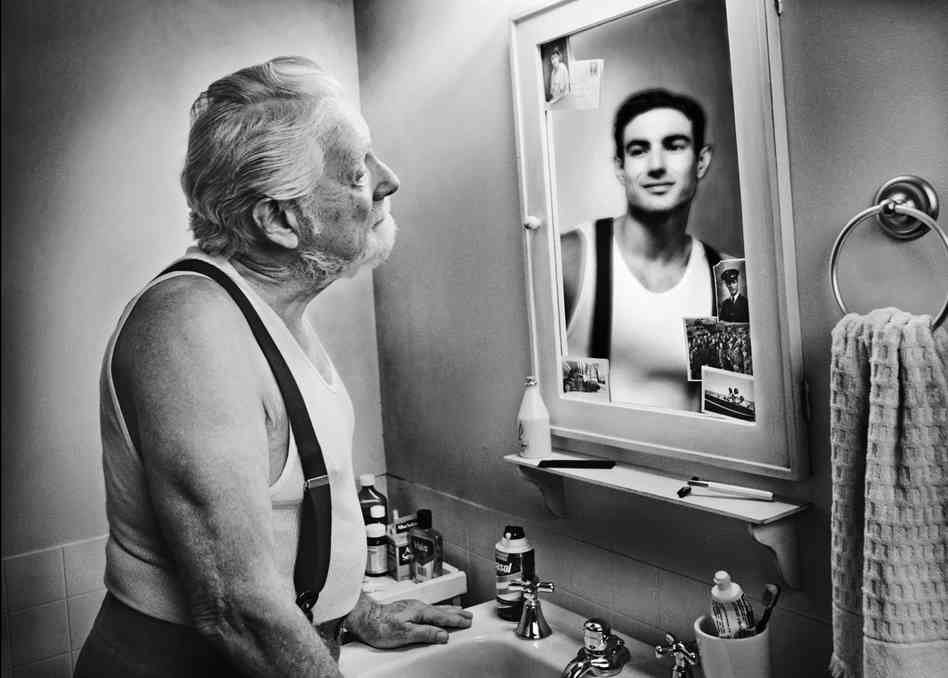
reflection-in-mirrorMy morning routine includes the couple of minutes I spend looking into the mirror.  This is not an exercise in vanity.  It’s just the best way to examine my wrinkled mug; apply the shaving cream; and wield the razor to shave my beard.

As I was checking the stubble on my face, I thought of Paul’s statement to the church at Corinth: “Examine yourselves as to whether you are in the faith (2 Corinthians 13:5).”

When you think about it, there are several times each day that you take the time to check the quality of some item:

  • Bananas are checked to see if they are too ripe or too green.
  • Apples are examined to see if they are bruised.
  • When you buy something you check to make sure you have been given the correct amount of change.

How much time do you spend in spiritual self-examination?  The Psalmist said:  “I thought about my ways, and turned my feet to Your testimonies (Psalm 119:59).”  When he didn’t like what he saw, the author of the Psalm ironed out the wrinkles in his life by turning to God’s Word.

The methodology of the Psalms was the same message espoused by James (1:21-25):

Lay aside all filthiness and overflow of wickedness, and receive with meekness the implanted word, which is able to save your souls. But be doers of the word, and not hearers only, deceiving yourselves.  For if anyone is a hearer of the word and not a doer, he is like a man observing his natural face in a mirror;  for he observes himself, goes away, and immediately forgets what kind of man he was.  But he who looks into the perfect law of liberty and continues in it, and is not a forgetful hearer but a doer of the work, this one will be blessed in what he does.

You have the freedom to look into the “perfect law of liberty” and to use it as a mirror to examine your life.  When you do this, what do you see?

  • Do you see a reflection of righteousness?
  • Is there an image of personal purity?
  • Do you recognize the features of faithfulness in the face you see?

A good mirror to use is a prayer in Psalm 139:23-24: “Search me, O God, and know my heart; try me, and know my anxieties; and see if there is any wicked way in me, and lead me in the way everlasting.”spic n span

Let me suggest this prayer as a daily test:  Does this mirror reflect a life that’s infested by the ring-around-the-collar filth of the world or one that is invested in the spic and span principles of God’s Word?

Recycling and Refocusing

recycle_word_peopleIn the Sunday edition of the Washington Post, Chris Mooney wrote:  “We have a problem, people: Even though we’re supposed to put the right stuff in the blue bin, a lot of recyclable material nevertheless winds up crammed into landfills. One of the most noteworthy of these is paper: While 64.6 percent of paper and paperboard got recycled in 2012, that still left 24.26 million tons of the stuff discarded, according to the EPA (Why We Don’t Recycle Crumpled Paper).”

While some things get tossed out simply because people won’t toss them in the recycle bin, research suggests there might be another reason.  The Environment and Behavior journal has reported on research by  Remi Trudel, Jennifer Argo, and Matthew Meng of Boston University and the University of Alberta.

Their research focused on the way your brain categorizes information and then acts on it.  When your brain sees a piece of crumpled paper, it perceives it to be trash and not something to be recycled.

The study found that, “Full sheets of paper were recycled 77.4 percent of the time, whereas crumpled paper was only recycled 7.8 percent of the time.”  The researchers said: “We consistently show that consumers’ decision to recycle the same product depends on whether the product is intact (i.e., whole) or distorted (i.e., crumpled, cut).”

When you meet an individual whose life has been crumpled by the power of sin or the heartache of failure, how do you respond?   Do you see them as trash or someone who can be recycled?

You are probably familiar with the verses that call you to be the “salt of the earth” and the “light of the world,” but how well do you know and put into practice the scriptural admonition to be a recycler?  In Romans 15:1-2, Paul said:

Those of us who are strong and able in the faith need to step in and lend a hand to those who falter, and not just do what is most convenient for us. Strength is for service, not status. Each one of us needs to look after the good of the people around us, asking ourselves, “How can I help?”

What is Christianity to you?  Is it an experience and relationship of convenience or are you willing to “lend a hand” to those in need?

God-Colors

plan-your-visitDid you accept the challenge I proposed yesterday?  If you read this blog on Thursday, you know that I encouraged you to be the peace in your piece of the world.

If you embraced my challenge, you were living the words of Jesus found in Matthew 5:16:  “Let your light so shine before men, that they may see your good works and glorify your Father in heaven.”

The Message elaborates on this command of Jesus:

“You’re here to be light, bringing out the God-colors in the world. God is not a secret to be kept. We’re going public with this, as public as a city on a hill. If I make you light-bearers, you don’t think I’m going to hide you under a bucket, do you? I’m putting you on a light stand. Now that I’ve put you there on a hilltop, on a light stand—shine! Keep open house; be generous with your lives. By opening up to others, you’ll prompt people to open up with God, this generous Father in heaven (Matthew 5:14-16).”

If you made my goal your goal, and you did your best to be the peace in your piece of the world, you were cherishing a basic principle of Jesus.  You were, “bringing out the God-colors” in your piece of the world, and people had the chance to see your light shining. They could see your “good works” in:

  • Your warm smile they enjoyed awhile because it reflected the love of God.
  • Your courteous disposition that was void of suspicion and full of sincerity.
  • Your word that cheered them while others jeered them. You were the “you-can-do-it” voice they needed to hear.
  • Your hand that helped them stand: You reached down, to help them stand up.

If you missed my challenge on Thursday, you can accept it today.  Be a “light-bearer” for Jesus, so you can share the dazzling light of God-colors.

I would like to hear your comments:  What do you think of when you think of “God-colors?”