The Sinister and the Saint

eyeI’m not sure if I should label it progression or regression, but I have gone from wearing no glasses, to bi-focals, and for several years now I have moved into the tri-focal stage.

Each step in this vision process involved a trip to the eye doctor and a prescription for new glasses.  The last time I got a new prescription for eyeglasses, I noticed the abbreviations OS and OD. The OS is for the left eye, and it is a Latin abbreviation that means “oculus sinister.”   The right eye is OD and is the Latin “oculus dextrus.”

The fact that I have a sinister left eye, made me curious, and I looked at the etymology of oculus sinister and dextrus:

  • The Latin meaning of sinister speaks of that which is “contrary, false; unfavorable; to the left.”
  • Dextrus has the meaning of being “right or ready.”

In these two words, we see the struggle that each of us face.  It is the conflict between evil and good or flesh and spirit.  In Romans 8:5, Paul said:  “For those who live according to the flesh have their outlook shaped by the things of the flesh, but those who live according to the Spirit have their outlook shaped by the things of the Spirit.”

Since your “outlook” is determined by the flesh or the spirit, you may want to take an “in-look” at what the Bible says about desire:

  • James 1:14-15: Everyone is tempted by his own desires as they lure him away and trap him.  Then desire becomes pregnant and gives birth to sin. When sin grows up, it gives birth to death.
  • Proverbs 27:20: Hell and Destruction are never full; so the eyes of man are never satisfied.
  • 2 Peter 2:14: Having eyes full of adultery and that cannot cease from sin, they entice unstable souls. They have a heart trained in covetous practices.

Which one of your eyes guides you?  Do you see the world through the sinister side or the saintly side?   I encourage you to take a look at your life, and consider using the words of Psalm 119:36-38 as your prayer for today:

“Turn my heart toward Your Law, so I will not earn money in a wrong way.  Turn my eyes away from things that have no worth, and give me new life because of Your ways.  Keep Your promise to Your servant, the promise You made to those who fear and worship You.”

Texas-Sized Trauma

dating-scam-traumaOkies and Texans have had more than just a wet spring.  The recent floods have left them soaked, drenched, and thoroughly saturated.  They must feel like Noah retired to their states and God has called him out of retirement for a sequel:  The Flood Part Two.

The residents of these two states are feeling the aftermath of Texas-sized trauma.  At some point in their ordeal, at least a few of them must have wondered:  “Why is this happening to me?”

A truthful answer to such a question is about as easy to digest as a shoe leather tamale. To borrow from the words of Winston Churchill, it is so difficult to understand that it “is a riddle wrapped in a mystery inside an enigma.”

Trusting God when times are good, is easy; however, when adversity is knocking at the door it’s much harder.  These are the times when you choose to believe in spite of the heartbreaking circumstances, and your belief is rooted in the truth of the bible.

When a traumatic event buckles your knees, you can find some comfort in three substantial truths about the nature of God:

  • He is complete in His sovereignty
  • He is infinite in His wisdom
  • He is perfect in His love.

These truths are at the heart of what Paul wrote in his letter to the Romans:  “God’s riches, wisdom, and knowledge are so deep that it is impossible to explain his decisions or to understand his ways (Romans 11:33).”

Your reaction to calamity should not be controlled by your feelings.  Instead, your response should be grounded in the truth and promises of God:

  • In Corinthians 12:9, God said to Paul: “My grace is enough for you, for my power is made perfect in weakness.” So then, I will boast most gladly about my weaknesses, so that the power of Christ may reside in me.”
  • In Philippians 4:6-7, Paul said the peace of God is sufficient to sustain you in your anxious moments.

Solomon made an interesting statement that can be applied to this discussion:  “Many are the plans in a person’s heart, but it is the Lord’s purpose that prevails (Proverbs 19:21).”

When your plans go awry, and the Lord’s purpose begins to prevail in some incomprehensible way, will you trust in His truth, love, wisdom, and knowledge?

The Happiness Secret

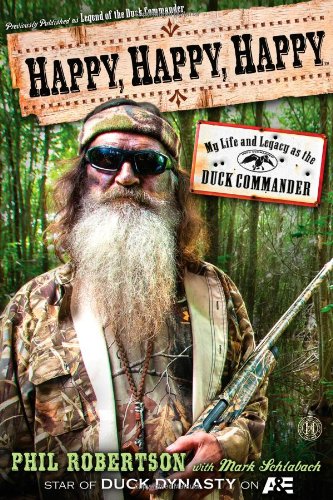
61rSjSmiZ1LEven though I’ve never watched a full episode of Duck Dynasty, I do know the motto of the main character on the show.  Phil Robertson often says:  “Happy!  Happy! Happy!”

Have you ever given any thought to the source of happiness?  The ancient philosopher, Aristotle tried to answer this question.  He believed the most important factor in an effort to achieve happiness is to have a good moral character:  “He is happy who lives in accordance with complete virtue and is sufficiently equipped with external goods, not for some chance period but throughout a complete life (Nicomachean Ethics).”

Happiness is not an on-going quest for instant gratification.  It is, however, the product of a disciplined life that has been focused on the practice of the virtues.

To be content, your life needs to be filled with the right content.  A good example of this is seen in a contrast of Abraham and Lot.  After a family feud, Abraham allowed Lot to claim the well-watered and fertile plains of Jordan as his territory. Lot turns his herds and servants in that direction, and after a brief period of time, he has “pitched his tent toward Sodom.”  Genesis 13 describes this city and its inhabitants as exceedingly wicked.

The difference between these Lot and Abraham is seen in the word content.  Lot’s tent (life) was full of conniving desires that led him away from the virtues of God; however, the story of Abraham was much different:  His tent (life) was content as he delighted in the goodness of God.

Ask yourself a couple of questions:

  • How happy am I?
  • Does the content of my life help or hinder lasting contentment?

As you think about these questions, read this excerpt from Psalm 1:  Blessed is the man who walks not in the counsel of the wicked, nor stands in the way of sinners, nor sits in the seat of scoffers; but his delight is in the law of the Lord, and on his law he meditates day and night.  He is like a tree planted by streams of water that yields its fruit in its season, and its leaf does not wither.

Is happiness an accident, or is it the result of a life well-lived?

Is A Name Just A Name?

Hello_my_name_is_sticker.svgLike many people, Psalm 23 is a favorite of mine.  As I was reading it earlier today, the last four words of  verse 3 caught my attention:  The Lord is my shepherd; I shall not want. 2 He makes me to lie down in green pastures; He leads me beside the still waters. 3 He restores my soul; He leads me in the paths of righteousness for His name’s sake.

When left to themselves, those last four words, “for His names sake” are just a vanilla phrase.  To really see the beauty of God, it helps to take a quick look at His name.  As written in the Hebrew language of the Old Testament, the names of God are colorful and explicit in their terminology, and they emphasize the way He interacts with His creation:

  • Jehovah-rophe (the Lord who heals you)
  • Jehovah-raah (the caring Shepherd)
  • Jehovah-jireh (the will provide)
  • Jehovah-shalom (the Lord is peace)

Take these four names of God and make a personal application to your life:

  • When you are struggling with emotional or physical issues, you can call out to Jevovah-rophe.
  • When you feel like you’re alone and no one cares, Jehovah-raah is present.
  • When you don’t know where to turn or what to do, Jehovah-jireh will provide.
  • When the world seems to be shattered and crumbling beneath your feet, Jehovah-shalom is the peace in the eye of the storm.

I hope a focus on “his name’s sake”  will be at the center of your thoughts today.

In God We Trust

In-God-We-TrustIt jingles and jangles in a jar, and it rattles around in your pocket or coin purse.  It bears the message, “In God We Trust.”

While you are well-aware of the inscription on your coins, is that motto your life theme?  Do you trust in God?

Let me rephrase the question:  “Can you trust in God?”  Is the character of God worthy of your trust?

When you read the Psalms, it is very clear that the writers of Scripture believed in the trustworthiness of God:

  • Psalm 9:10: Those who know your name trust you, O Lord, because you have never deserted those who seek your help.
  • Psalm 13:5: But I trust your mercy. My heart finds joy in your salvation.
  • Psalm 37:3,5: Trust in the Lord and do good; Dwell in the land and cultivate faithfulness . . . Commit your way to the Lord, Trust also in Him, and He will do it.
  • Psalm 56:4: In God I have put my trust; I shall not be afraid. What can mere man do to me?

After you have given some consideration to the verses above, the next question for you is, “Will I trust in God?”

Solomon said that you are to, “Trust in the Lord with all your heart, and lean not on your own understanding; in all your ways acknowledge Him, and He shall direct your paths (Proverbs 3:5-6).”

When the wise sage said you are to “lean not” he was saying that you are not to prop yourself up with you own wisdom.  Instead you are to “acknowledge” or trust God and allow Him to “direct your paths.”

The next time you pull a coin out of your pocket, take the time to read the inscription: “In God We Trust.”  Then examine your life and ask yourself:  “Am I trusting God?”

A Better Way

images (3)I recently made the comment that, “Sometimes we sacrifice the best because we are content with just the good.”  I think it was Saint Jerome who said:  “Good, better, best. Never let it rest. ‘Til your good is better and your better is best.”

If my memory serves me well, it was Ernest Hemingway who said: “There is nothing noble in being superior to your fellow man; true nobility is being superior to your former self.”

The business of being better is discussed in several places in the Wisdom Books of the Bible.  My Top 10 list of verses follows below:

  1. Psalm 37:16: A little that a righteous man has is better than the riches of many wicked.
  2. Psalm 118:8: It is better to trust in the Lord than to put confidence in man.
  3. Proverbs 15:16: Better is a little with the fear of the Lord, than great treasure with trouble.
  4. Proverbs 15:17: Better is a dinner of herbs where love is, than a fatted calf with hatred.
  5. Proverbs 16:8: Better is a little with righteousness, than vast revenues without justice.
  6. Proverbs 16:16: How much better to get wisdom than gold! And to get understanding is to be chosen rather than silver.
  7. Proverbs 16:19: Better to be of a humble spirit with the lowly, than to divide the spoil with the proud.
  8. Proverbs 16:32: He who is slow to anger is better than the mighty, and he who rules his spirit than he who takes a city.
  9. Proverbs 17:1: Better is a dry morsel with quietness, than a house full of feasting with strife.
  10. Proverbs 19:1: Better is the poor who walks in his integrity than one who is perverse in his lips, and is a fool.

I hope these verses serve as a motivator to get you started in the pursuit of betterness.  Once you get started, you can develop the habits that will keep you going.

Indexing The Heart

images (2)Many years ago, I was told that good speakers have at least three characteristics in common:  They stand up, speak out, and sit down.

The book of Proverbs is full of good principles for you and the way you speak.  Proverbs 4:24 is a good example:  “Remove dishonesty from your mouth. Put deceptive speech far away from your lips.”

When you consider the underlying principles of this verse, you see that:

  • Dishonesty needs to be removed: Whenever it moves in you need to move it out.
  • Dishonesty is a nasty dish of lies that should never be allowed to nest in your mouth.
  • You should never be receptive to deceptive speech: Put it far away from your lips.

In Proverbs 10, Solomon highlights the benefit of wholesome speech:

  • The mouth of a righteous person is a fountain of life (verse 11).
  • The tongue of a righteous person is pure silver (verse 20).
  • The lips of a righteous person feed many (verse 21).

If you’ll take the time to compare the words of Solomon to the teachings of James, you’ll see a well-defined contrast:

  • Solomon likened the tongue of the righteous to pure silver.
  • James said the unrighteous use of the tongue will “defile the whole body.”

Listen to the manner in which you speak and the tenor of your conversation.  When you become more aware of what you say and how you say it, you get a better idea of the real you.  This is because your speech or your tongue is the index of your heart.

The Mental Marks of Maturity

images (1)Some people think maturity comes with age; however, being a certain age does not make you a wise old sage.  You really have no choice when it comes to aging; however, it takes some effort to wisely mature.

Growth of this kind is a common topic in the Bible:

  • Peter reminded Christians to “grow in the grace and knowledge of our Lord and Savior Jesus Christ (2 Peter 3:18).”
  • In what he thought would be his last communication with the elders from Ephesus, Paul said: “I commit you to God and to the message of His grace, which is able to build you up and to give you an inheritance among all who are sanctified (Acts 20:32).”
  • Solomon offered this word of advice in the Proverbs: “You gullible people, learn how to be sensible. You fools, get a heart that has understanding (8:5).”

While I was reading in Philippians yesterday, I noticed something interesting.  Paul gives a clear indicator of maturity:  “Forgetting what is behind and reaching forward to what is ahead, I pursue as my goal the prize promised by God’s heavenly call in Christ Jesus.  Therefore, all who are mature should think this way (Philippians 3:13-15).”

According to this verse, you show signs of maturity when:

  • You are not bound by the chains of the past.
  • You choose to invest in the future
  • You pursue a relationship with Jesus.
  • You discipline yourself to control your thoughts so you can “think this way.”

I hope this mature thought from Paul will keep you thinking:

“Summing it all up, friends, I’d say you’ll do best by filling your minds and meditating on things true, noble, reputable, authentic, compelling, gracious—the best, not the worst; the beautiful, not the ugly; things to praise, not things to curse. Put into practice what you learned from me, what you heard and saw and realized. Do that, and God, who makes everything work together, will work you into his most excellent harmonies.”

Philippians 4:8-9 ~The Message

In the Line of Duty

imagesWhat is the significance of the number 51?  If you are counting to 100, it means you are over half there, or that you still have 49 numbers to go.  If you are celebrating a birthday, you can now say:  “I’m more than half a century old.”

If you are among a special class of mothers, it means your heart is broken.  It means that the precious child you held in your arms as a baby is now gone—killed in the line of duty.

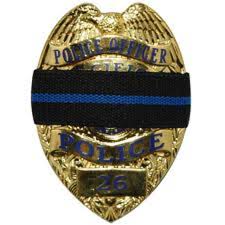
51!  50 +1 police officers gave their lives in 2014 as they did their best to protect and serve the people and communities where they lived.  In 2013 the FBI reported that 27 officers died in the line of duty.  This was the smallest number in a single year since 1980.

When I think of these sad and startling statistics, I’m reminded of the words of Paul to Timothy:

First of all, then, I urge that supplications, prayers, intercessions, and thanksgivings be made for all people,  for kings and all who are in high positions, that we may lead a peaceful and quiet life, godly and dignified in every way.  This is good, and it is pleasing in the sight of God our Savior, who desires all people to be saved and to come to the knowledge of the truth.  For there is one God, and there is one mediator between God and men, the man Christ Jesus, 6 who gave himself as a ransom for all, which is the testimony given at the proper time.

~I Timothy 2:1-4

Is our society void of a “peaceful and quiet life” because “supplications, prayers, intercessions, and thanksgivings” are not being made for our government officials and on behalf of our law enforcement officers?

Please join me in praying for their safety and protection and for the collective mindset of our nation as a whole.

A Clear and Present Danger

advisoryAn article in the Saturday edition of the Washington Post caught my attention: “The U.S. military has boosted security at all of its stateside bases and stations, broad recognition that the United States has heightened its awareness of a possible attack inspired by the Islamic State militant group, U.S. officials said Friday.”

With this report following on the heels of the recent incident in Garland, Texas, it was a frequent topic of discussion on Saturday morning.  When the security level is raised it gets a person’s attention.

Pentagon spokesman, Army Col. Steve Warren said: “The military believes there is an increased and predictable security threat at home, with extra precautions, ID checks and searches launched across the country. It does not mean that an attack is considered imminent, however.”

How would your behavior change if you were told the danger is most certainly “imminent”?  You may not be aware of it, but here is a statement that warns you are in grave danger!

Keep your mind clear, and be alert. Your opponent the devil is prowling around like a roaring lion as he looks for someone to devour. Be firm in the faith and resist him, knowing that other believers throughout the world are going through the same kind of suffering.  ~I Peter 5:8-9

Watch your back, there’s a lion on the prowl.