Imposters

C.H. Spurgeon was known as the “Prince of Preachers,” and he once said, “Every Christian is either a missionary or an impostor.”   Someone else said that, “a non-ministering Christian is a contradiction in terms.

God does not call everyone to be a pastor or a preacher; however, He does call each of His children to minister.   While we can minister to the needs of one another inside of the building we call First Christian,  our main area of focus is what lies outside of the doors of the church—this is our mission field.

In John 4:35, Jesus said:  “Do you not say, ‘There are still four months and then comes the harvest’? Behold, I say to you, lift up your eyes and look at the fields, for they are already white for harvest!”

To work in the harvest is to embrace the missionary mindset of Jesus.  He said His purpose was to seek and to save the lost.  This task was not reserved for Him alone.  His expectation was and is that we would join Him in this effort:  “As the Father has sent me, I am sending you” (John 20:21).

Are you satisfied to just set on a pew row or are you willing to get up and GO with Jesus to the mission field?  Engaging people was the goal and purpose of Jesus’ ministry, and it is His desire for each of us.

Ask yourself some questions:  How am I engaged in the work of Christ?  How does my life compel people to embrace Jesus?

I’ll end this post with a quote from C.S. Lewis:  The Church exists for nothing else but to draw men into Christ, to make them little Christs. If they are not doing that, all the cathedrals, clergy, missions, sermons, even the Bible itself, are simply a waste of time. God became Man for no other purpose.

A Slip of the Tongue

oopsAs I was updating the message on the church’s electronic sign to promote the annual Super Bowl of Soup (February 2), I made a minor mistake in my spelling.  Mind you now, some minor mistakes can really have a major impact on the meaning of a message.

My typographical slip of the tongue had the message reading Super Bowel of Soup—not to appetizing is it?

According to Psychology Today, “Slips of the tongue are almost inevitable. For every 1,000 words spoken, we make one or two errors. Considering that the average pace of speech is 150 words a minute, a slip is bound to occur about once every seven minutes of continuous talk. Each day, most of us make somewhere between 7 and 22 verbal slips.”

I remember an incident several years ago that involved Ted Kennedy.  Education was one of the many passions of the now deceased senator.   During the speech, Kennedy said:  “Our national interest ought to be to encourage the breast.”  There was some nervous laughter from the audience, and Kennedy quickly corrected himself—“I mean the “best and brightest.”

I remember Frank Marley, a rock solid individual and man of character, telling me one day: “Don’t take a man for what he says, take him for what he means.”  We need to be careful when we speak, so that our words are appropriately meaning-filled.

In Matthew 12:36, Jesus said:  “But I say to you that for every idle word men may speak, they will give account of it in the day of judgment.”  I wonder how a slip of the tongue will be considered?

Silver and Gold

sumerian_idolsI’m reading through the book of Psalms this month.  To accomplish this task, each day I read every 30th Psalm.  As an example, on the 15th, I read Psalms 15, 45, 75, 105, and 135.

When I read my Bible, I follow a thought or theme from one Scripture or book to another one.  One day this week, my journey eventually led me to Psalm 115.  Even though I’ve read this Psalm many times, verses 15-18 really caught my attention this time:

The idols of the nations are made of silver and gold.
They were made by human hands.
16 They have mouths, but they cannot speak.
They have eyes, but they cannot see.
17 They have ears, but they cannot hear.
They cannot breathe.
18 Those who make idols end up like them.
    So does everyone who trusts them

Typically, idols were chiseled from rock or crafted from metal.  Does verse 18 mean that a person’s heart can become as hard as a rock or as cold as a piece of metal?

Perhaps we need to inventory our lives and see which possession, hobby, or habit best defines us, and what it says about our relationship with the Lord.

Just a thought that I thought was worth sharing.

The Old Gray Mare

old-gray-mareMy mom was fussing about some aches and pains, so I started teasing her with an old folk song called the Old Gray Mare.  A repeated line in the song says, the old gray mare ain’t what she used to be.

After I sang a line or two of the song, I came to realize there is some theological significance to those words; and, fortunately, I’m not what I used to be.

There are several places that Paul speaks of this change.

  • Ephesians 2:  But now through Christ Jesus you, who were once far away, have been brought near by the blood of Christ . . . you are no longer foreigners and outsiders but citizens together with God’s people and members of God’s family
  • 2 Corinthians 5:17:  Whoever is a believer in Christ is a new creation. The old way of living has disappeared. A new way of living has come into existence.

The Old Gray Mare has a focus on how the old horse is wearing out and breaking down.  Our focus should be on who we are in Christ.  Paul tells us:  God’s kindness overflows in the lives of many people, and it will produce even more thanksgiving to the glory of God.  That is why we are not discouraged. Though outwardly we are wearing out, inwardly we are renewed day by day.  Our suffering is light and temporary and is producing for us an eternal glory that is greater than anything we can imagine.  We don’t look for things that can be seen but for things that can’t be seen. Things that can be seen are only temporary. But things that can’t be seen last forever (2 Corinthians 4).

Let’s endeavor to renew our minds, so we can be renewed day by day.

Cogito Ergo Sum

1855645010_thinking_thoughts_xlargeCogito Ergo Sum is a Latin phrase that means I think therefore I am.  The little mental messages that flash through the mind act as a backseat driver that determines the direction of a person’s life. They either read the map clearly or they act as a dysfunctional detour.

With this being true, a person needs to give some thought to his thinking.   Are you more prone to mindless musings or mindful meditations?  Zig Ziglar was an often quoted motivational speaker who knew the importance of the thoughts we think.  Ziglar encouraged people to perform a “daily check up from the neck up to avoid stinkin ‘thinkin’.”

Ziglar was a Christian, and it’s possible that some of his quotes were Scripture-based.  The words of the Apostle Paul may have provided Ziglar some food for thought:  We demolish arguments and every high-minded thing that is raised up against the knowledge of God, taking every thought captive to obey Christ (2 CorInthians 10:5).

Let me share a couple more Ziglarisms:

  • Remember that failure is an event, not a person.
  • You will get all you want in life, if you help enough other people get what they want.
  • People often say motivation doesn’t last. Neither does bathing—that’s why we recommend it daily.
  • If you go looking for a friend, you’re going to find they’re scarce. If you go out to be a friend, you’ll find them everywhere.
  • Your attitude, not your aptitude, will determine your altitude.

When the Apostle Paul wrote to the church at Philippi, he encouraged them to think about their thoughts:  Finally brothers, whatever is true, whatever is honorable, whatever is just, whatever is pure, whatever is lovely, whatever is commendable—if there is any moral excellence and if there is any praise—dwell on these things.

Have you given much thought about how you will think in 2014?  Here are a couple of suggestions:

  • Think excellent thoughts and not ones of mediocrity
  • Think thoughts that are full of compassion and not misdirected passion
  • Think constructive and not destructive thoughts
  • Think powerful thoughts of faith instead of paralyzing thoughts of fear
  • Think thoughts of reconciliation and not retaliation

Thomas Edison once said that, Five percent of the people think; ten percent of the people think they think; and the other eighty-five percent would rather die than think.

Where are you in Edison’s equation and are your thoughts mindless musings or mindful meditations?

A Godly Grip

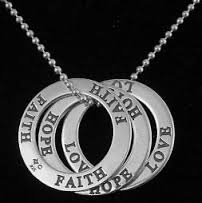
gripAmong the many gifts given this time of year, I often see people wearing a new necklace or bracelet.  Some people wear a specific type of jewelry as a sense of identity and others wear another kind that identifies them as someone with a special health concern.

There is another type of locket that can be worn around a person’s neck.  Solomon described it in Proverbs 3: Don’t lose your grip on Love and Loyalty. Tie them around your neck; carve their initials on your heart. Earn a reputation for living well in God’s eyes and the eyes of the people.

Of all the gifts that we give and receive, love and loyalty are two of the most important.  When correctly worn, we are easily identified as a child of the King.

Loyalty is not something we wear for special occasions, nor is it a word to be casually spoken; instead, it is a lifestyle to be embraced; furthermore, our loyalty to our Lord should always be an ! and not a ?

Zig Ziglar was known for his wit and wisdom, and he once said:  The foundation stones for a balanced success are honesty, character, integrity, faith, love and loyalty.necklace

As we move into 2014, I hope each of us can embed these characteristics as jewels and, tie them around our necks, and carve their initials in our hearts.

Yes Virginia

200px-WalkerTitleYes Virginia, there really was a Walker Texas Ranger.  His name was Captain Samuel H. Walker.  In 1844, Walker and 16 Texas Rangers had defeated 80 Comanche Warriors at the battle of Walker’s Creek.

Because of battles like this, Walker realized there was a need for superior firepower, so he contacted Samuel Colt and the two of them designed a .44 revolver that came to be called the Walker Colt.  This pistol remained the premiere handgun for the next 88 years, and it was without peer until the advent of the .357 magnum in 1935.

Advent?  Did I just say advent in the preceding sentence?   We need to understand Advent as the coming or arrival of something or someone of special importance.  Walker and his Texas Rangers had looked forward for many years for a better pistol, but the Advent of really special importance is celebrated each year at this time; and, it commemorates the long-awaited birth of the Christ child.

The Walker Colt may have changed the way the Texas Rangers engaged the enemy, but the Advent of Jesus changed the entire world.  The Old Testament prophets had predicted the birth of Messiah for hundreds of years, and when He was finally born, John said he was full of grace and truth.

Walker may have stood for the truth, but I doubt he showed much grace to his enemies.  Jesus did, and He still does because God gave, and he still gives.  Christmas is about receiving from a giving God.

John said:  As many as received Him, to them He gave the right to become children of God, to those who believe in His name (John 1:12).

As you unwrap the packages beneath the Christmas tree, remember God’s gift Who was born in the manager and died on a tree.  This is the ultimate gift because it is the gift of eternal life.

The Unseen Herald

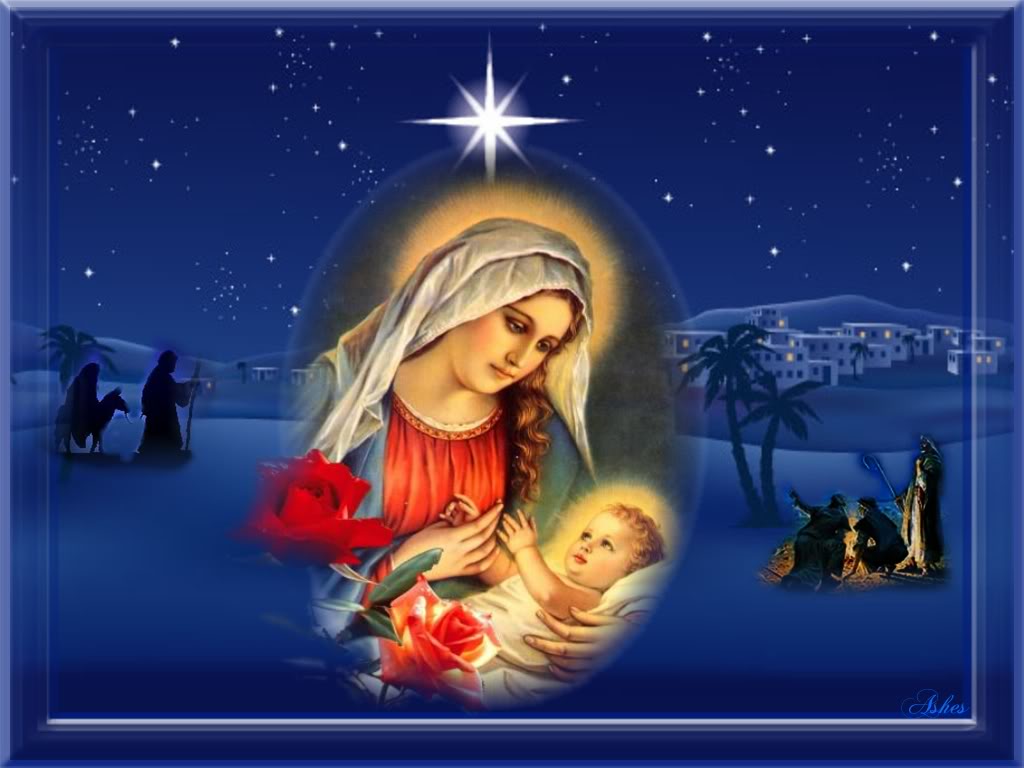
unseenForgiveness is not a word that we often associate with Christmas; however, it was the unseen herald that attended the birth of Jesus.  When a joyful Mary laid her innocent child in the hay-lined crib, I imagine His impending death was beyond her imagination.

That was, however, the very reason Jesus was born:  It was to die, so we could find forgiveness in Him.  Real forgiveness is God pardoning the unpardonable, and for forgiveness to be appropriated, sinful man must believe the almost unbelievable.

I can believe that I might give my life to save another person, but I cannot fathom the possibility of me giving the life of one of my children for the benefit of another.

And, it is because God gave His son, that we have the gift of Christmas—hope.  At those times when things seem so hopeless, the eternal gift of God is ours to claim.

After all the packages have been opened on Christmas morning, the wrapping paper has been trashed, and the batteries in the new toys have lost their charge, the hope of Christmas will still reign supreme.

I encourage to take some time to consider God’s gift, and to embrace the hope of Christmas we find in the person of Jesus.

The Musing of Mary

MaryDidYouKnowHave you ever given more than a single thought to the many thoughts of Mary? I do, when I read an interesting verse in Luke 2. It causes me to wonder: “Mary kept all these things and pondered them in her heart.”

When Mary pondered the message of the angels, and the words of the shepherds, was there really anyway she could fully comprehend the meaning of that first Christmas? When she looked into the eyes of her innocent son, could she mentally grasp that she would emotionally gasp 30 years later when he took on
the sin of the world?

How could she know that the son created in her womb would have such miraculous power over creation? When he changed the water into wine at the marriage supper in Cana, was this an ”Aha moment” for her?

What did she think when she realized her son had a leg up on the religious charlatans of the day and healed the legs of a crippled man?

When Mary saw a crowd of hungry faces suddenly satisfied by a sack lunch that was multiplied 5,000 times, did she realize that her son would also satisfy the spiritual hunger of the world?

When her son of a carpenter was dying an excruciating death on a wooden cross, did her anguish confound her comprehension of God’s ultimate plan?

How fast did her heart beat when she heard that her three-days-dead son had removed his grave clothes, rolled away a massive stone, run off a squad of soldiers, and became the resurrection and life to all who would believe?

There are some things that I ponder in my heart:
• How could Jesus understand everything, but be misunderstood by most everyone?
• Who was his best childhood friend? Could it have been a boy named Judas?
• What did he and his cousin John (later called the Baptist) talk about?
• Did his brothers and sisters see him as unique or annoyingly odd?

What thoughts fill your mind during the season of Christ’s birth? Some thoughts are worth thinking and some songs worth singing. I’ve included a couple of them here:
Mary Did You Know
Do You Hear What I Hear?

The Broken Circle

circleThis past Tuesday night the contestants on The Voice sang “Will The Circle Be Unbroken?” The aspiring musicians sang a different rendition of the song when it came to the word “Lord.” Instead of singing “Lord,” they substituted the word “Oh.”

In an effort to harmonize with the pitch of the producers, The Voice hopefuls were off key with the original message of the song. Changing from “Lord” to “Oh” might be a small change if all a person is concerned with is spelling; however, it has major implications when we consider the often skewed circle of a once grateful nation.

The producers of the show eliminated the “Lord” at the time our nation once expressed gratitude for His grace. Their lack of grazioso stated a motif that was more buzzard than blessing.

Kudos to coach Blake Shelton who said: “I was sitting in my chair singing that song how I grew up on it, with ‘in the sky, Lord, in the sky.’ I sang it as loud as I could. And that might be why I didn’t realize until after the fact that ‘Lord’ was either taken out, or it was just performed some other way.”

The title of this show, The Voice, reminds me of a story in I Kings 19. God spoke to Elijah and said: “Go out and stand on the mountain in the Lord’s presence.” At that moment, the Lord passed by. A great and mighty wind was tearing at the mountains and was shattering cliffs before the Lord, but the Lord was not in the wind. After the wind there was an earthquake, but the Lord was not in the earthquake. After the earthquake there was a fire, but the Lord was not in the fire. And after the fire there was a voice, a soft whisper. When Elijah heard it, he wrapped his face in his mantle and went out and stood at the entrance of the cave. Suddenly, a voice came to him and said, “What are you doing here, Elijah?”

Social media indicated that many of the people who watched the show asked the same question: “What are you doing!”

Doing what they did is a far cry from what President George Washington did when he proclaimed Thursday the 26th of November 1789 as a day of “public thanksgiving and prayer” devoted to “the service of that great and glorious Being who is the beneficent Author of all the good that was, that is, or that will be.”

Oh Lord, may I always remember Your blessings, grace, and mercy. For these I give thanks.