Recycling and Refocusing

recycle_word_peopleIn the Sunday edition of the Washington Post, Chris Mooney wrote:  “We have a problem, people: Even though we’re supposed to put the right stuff in the blue bin, a lot of recyclable material nevertheless winds up crammed into landfills. One of the most noteworthy of these is paper: While 64.6 percent of paper and paperboard got recycled in 2012, that still left 24.26 million tons of the stuff discarded, according to the EPA (Why We Don’t Recycle Crumpled Paper).”

While some things get tossed out simply because people won’t toss them in the recycle bin, research suggests there might be another reason.  The Environment and Behavior journal has reported on research by  Remi Trudel, Jennifer Argo, and Matthew Meng of Boston University and the University of Alberta.

Their research focused on the way your brain categorizes information and then acts on it.  When your brain sees a piece of crumpled paper, it perceives it to be trash and not something to be recycled.

The study found that, “Full sheets of paper were recycled 77.4 percent of the time, whereas crumpled paper was only recycled 7.8 percent of the time.”  The researchers said: “We consistently show that consumers’ decision to recycle the same product depends on whether the product is intact (i.e., whole) or distorted (i.e., crumpled, cut).”

When you meet an individual whose life has been crumpled by the power of sin or the heartache of failure, how do you respond?   Do you see them as trash or someone who can be recycled?

You are probably familiar with the verses that call you to be the “salt of the earth” and the “light of the world,” but how well do you know and put into practice the scriptural admonition to be a recycler?  In Romans 15:1-2, Paul said:

Those of us who are strong and able in the faith need to step in and lend a hand to those who falter, and not just do what is most convenient for us. Strength is for service, not status. Each one of us needs to look after the good of the people around us, asking ourselves, “How can I help?”

What is Christianity to you?  Is it an experience and relationship of convenience or are you willing to “lend a hand” to those in need?

The Esau Syndrome

happy-treeWhile visiting with a neighbor, I was asked:  “Do you know anything about trees?” Before I could reply in the negative, he pointed to a tree that was losing its bark.  I suggested that he call an arborist or someone skilled in dendrochronology.

An arborist is someone who is trained to plant and cultivate trees, and dendrochronology studies tree rings to determine the dates and chronological order of past events.  By studying the rings of a tree, a person can identify the years that were dry spells and distinguish them from the wet seasons.

It’s not the rings of a person’s life that reveals his wet and dry seasons, but it’s the scars and the wrinkles.  Naomi is a woman who experienced both the wet and dry seasons.

As a young woman, she left Bethlehem with her husband and two sons.  Even though Moab was off-limits to Jews, she and her family settled there.  While living in the forbidden land of Moab, Naomi lost her husband, both sons, her wealth, and her beauty.

The dry years in Moab left their marks on Naomi.  By the time she returned to her homeland, her youthful skin had become wrinkled and she had been scarred by spiritual neglect.  When her old friends and neighbors saw her they asked:  “Is this Naomi?”

She replied:  “Don’t call me Naomi.  Call me Mara: for the Almighty has dealt very bitterly with me. I went out full, and the Lord has brought me home again empty.”

Because her life experiences had changed her, Naomi didn’t believe she was worthy of a name that means “pleasant, winsome, or agreeable.”   She believed the name Mara or “bitter” was more appropriate.

Naomi and her husband had made the same mistake that Esau made many years earlier.  Due to a lack of spiritual insight, he had traded his birthright to satisfy his short-term appetite:

“Work at getting along with each other and with God. Otherwise you’ll never get so much as a glimpse of God. Make sure no one gets left out of God’s generosity. Keep a sharp eye out for weeds of bitter discontent. A thistle or two gone to seed can ruin a whole garden in no time. Watch out for the Esau syndrome: trading away God’s lifelong gift in order to satisfy a short-term appetite. You well know how Esau later regretted that impulsive act and wanted God’s blessing—but by then it was too late, tears or no tears.”

What do the rings of your life say about you?  When you look into the mirror of God’s Word, what do you see?  Do you see the weeds of discontent or do you see the fruit of love, joy, and cheerfulness?

Your Piece of the World

03world-puzzleWhether you live in the USA, England, Europe, Africa, or Asia, there is one thing you hold in common.  You and the rest of humanity want peace in your piece of the world–certainly, this is the case in El Paso, Texas, and Dayton, Ohio this morning.

I know I’ve grown weary of all the protests, murders, shootings, and rapes that I see on the screen of my TV.  The headlines of the newspaper are depressing with stories of theft, scandals, and abused children.

Here is what I am going to do in my piece of the world today. Instead of being, “overcome by evil, I’m going to overcome evil with good (Romans 12:21).”  I am going to try my best to, “pursue the things which make for peace and the things by which one may edify another (Romans 14:19).”  J.B. Philipps translated this same verse in these words:  “Let us concentrate on the things which make for harmony, and on the growth of one another’s character.”

Will you join me and make this your goal for today:

  • I will pursue and concentrate on bringing peace to my piece of the world.
  • When confronted with the off-key and unkind remarks of others, I will try to bring harmony to the situation.
  • I will do my best to be a positive presence in the life of those I encounter.

So what in the world are you going to do today?  I encourage you to bring peace to your piece of the world.

Are You Eyesome or an Eyesore?

in_the_eyes_of_god_by_rainacornasusgirl-d652cziEyesome is a word that I had never seen or heard of until yesterday, and it means, “Pleasant to look at.” When I discovered its meaning, I thought of the words of Peter when he spoke of the “incorruptible beauty of a gentle and quiet spirit, which is very precious in the sight of God (I Peter 3:4).”

I see fewer eyesome people who are noted for their “incorruptible beauty” and “gentle and quiet spirits.” Instead, there seems to be a proliferation of people who proudly exhibit a spirit that is reckless and impetuous.  This sort of person is less eyesome and more of an eyesore with a spirit that is rude, crude and arrogant.

What can you learn when you focus your eye on some of the Scripture below?

  • In Ephesian 4:1-3, Paul said I “urge you to live in a way that is worthy of the calling to which you have been called, demonstrating all expressions of humility, gentleness, and patience, accepting one another in love. Do your best to maintain the unity of the Spirit by means of the bond of peace.
  • In his advice to young Timothy, Paul instructed him to “pursue righteousness, godliness, faith, love, patience, gentleness (I Timothy 6:11).”
  • Paul emphasized the importance of gentleness when he wrote to the church at Philippi: “Let your gentleness be known to all men (Philippians 4:5).”

To be perceived as more eyesome and less of an eyesore, I encourage you to give some thought to Psalm 90:17:  “Let the beauty of the Lord our God be upon us, and establish the work of our hands for us.”

The “beauty of the Lord” does not speak of any physical feature, but it does mean that God can make you an eyesome creature.  When His beauty is upon you, He will begin to develop the “incorruptible beauty of a gentle and quiet spirit, which is very precious” in His sight.

Urgent Email

MailChimp is a company that is focused on email, and their website says:  “MailChimp helps you email the right people at the right time.”  In 2013 the company studied 24 billion successfully delivered emails, and they discovered the power inherent in one word.   When the word “urgent” was in the subject lines, the emails were much more likely to be opened.

Words like “urgent” will jolt most dolts out of their daydreaming existence and back to reality.  This type of charged language, unless overused, can effectively capture the attention of the intended audience.

To apprehend the attention of those who could only pretend righteousness, Jesus spoke a word of urgency:  “Repent or you will perish (Luke 13:3, 5).”

When you read the gospel of Mark, the first words of Jesus are an evangelistic call to repent:  “The time is fulfilled, and the kingdom of God is at hand; repent and believe in the gospel (Mark 1:15).”

“Repentance comes from the Greek word “metanoia,” and it means a” change of mind.”  When a person repents, he turns from sin to God.  The story of the Prodigal Son is a good example of repentance:  When he came to himself, he said . . . “I will arise and go to my father, and will say to him, Father, I have sinned against heaven and before you.”

“Praise” and “worship” are two of the feel-good-words associated with the church today.  These are important features of a person’s relationship with Christ, but they are meaningless unless you attend to the urgent need to repent of your sin.

People don’t mind focusing on the failures, faults and sins of people they know, but they start to back-peddle and say, “Don’t meddle” when it comes to their personal need to repent.


Out-Rage-Us: Purveyors of Religious Intolerance

When some people see it, thy see more than one—they see two.  What do you see when you see the word “outrage?”  Do you see “out” and “rage?”

Some people try to understand the etymology of outrage by defining it in the context of “out” and “rage.”  To do so is to misunderstand the origins of the word.  Early usage of the word is traced from the Middle English sense of a “lack of moderation” back to its Latin roots of “ultra” or “beyond,” and it has little to do with “out” and “rage.”

Even though I understand the meaning and the roots of outrage, to simply say that the religiously intolerant exhibit a “lack of moderation” seems grossly inadequate.  It seems there is a radical element that has little more than an elementary understanding of their religion.  To espouse the idea of peace and love and then kill in the name of religion is outrageous.

Two recent incidents serve as an example:

  • The terrorist activity in France and the cold-blooded attack on Charlie Hebdo and the team of cartoonists who focused on satire.
  • The massacre of innocents by Boko Haram which, according to Amnesty International, has resulted in the death of some 2,000 people in Nigeria.

As I said late last week:

It seems unreasonable that someone can be offended by cartoons, but at the same time promote rape, beheadings, hostage taking, forced marriages, genital mutilation, and suicide bombings

What happened to a simple life based on the Golden Rule? Do unto others as you would have them do unto you.

The Abu Dawud offers the Golden rule in these words:  “Do unto all men as you would wish to have done unto you; and reject for others what you would reject for yourselves.”

The world will be a better place when we stop out-raging people and begin out-loving them.

What’s Following You?

On Tuesday of this week, I walked the hallway of three different hospitals. My first stop took me to the room of a man who is ravaged by cancer.  I saluted him earlier this year when he was the Parade Marshall of the Celebration of Freedom Parade.  Will’s heroic deeds during World War II helped to pay for the freedoms I enjoy today.

My second stop took me to the room of a man I’ve know all of my life. I’ll always be grateful for his friendship and his help.  Johnny was one of the first people to come to my house when I was a 12 year old boy and my dad had just been killed in an oil field accident.

My third stop was the most difficult because it took me to the room of a blonde-haired and blue-eyed little girl.  At the age of 2 1/2 years she is fighting an inoperable case of cancer, a neuroblastoma.

Yesterday, I conducted the funeral of a man, I worked with my last two summers of high school.  Ralph’s face was usually marked with an ear to ear grin, and I will remember the mischievous sparkle that colored his eyes.

The sadness that has filled the lives of each of these people and their families can only be tempered by the hope that we have in Jesus Christ.  A foreshadow of that hope is see in the verses of Psalm 23.

If you feel like you are living under a cloud of despair, and walking a path full of worries and problems, you might find some comfort in the words of this Psalm and the declaration of David: Surely goodness and mercy shall follow me all the days of my life (23:6).

I think it is important to note that David did not say that every waking moment of your life will be filled with good times and happy days.  He did say the goodness of God and His mercy are resources that are available when needed.

Unless you have given some consideration to the meaning of mercy and its close cousin, grace (goodness), you may think they are synonymous.  To help you distinguish one from the other, let me define them:

  • Grace is when God gives you something you do not deserve.  Salvation is a good example of this.  I do not know of anyone who really deserves it.
  • Mercy is when God does not give a you what you deserve.  When a righteous God judges sinful man, He can either punish him or extend His goodness and mercy.

I’ve heard people say:  I just want what I deserve and what I have coming to me.  Not me, I want the mercy of God.

David said the mercy of God is a given, and we see this in the word surely.  It isn’t a hope so or maybe so proposition: It’s a guarantee from God.  In the Lamentations of Jeremiah, the prophet said:  It is of the Lord’s mercies that we are not consumed; they are new every morning.  Great is His faithfulness!

In the shepherd/sheep analogy of Psalm 23, we have the Good Shepherd who leads us, and guarding the back of the flock are His two sheep dogs.   One is named Goodness and the other is called Mercy.

Remember the promise of this Psalm:  Surely goodness and mercy will follow you all the days of your life.  Think of Goodness and Mercy as your lap-dogs who are just a whistle away.

ASAP

asapWhen you read the title of this post, how did your mind interpret it? Was it: As Soon As Possible?

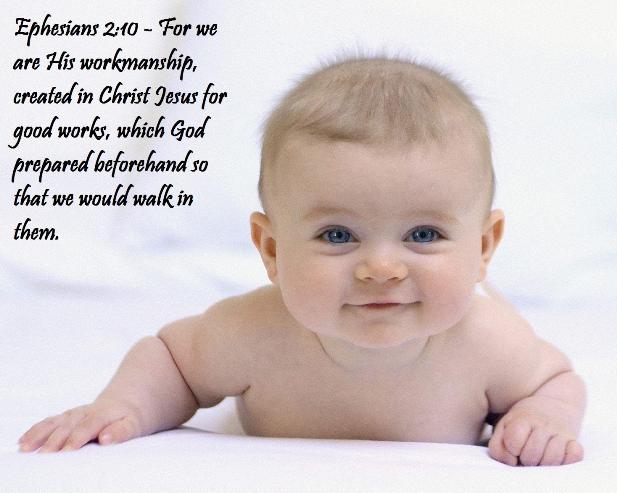
Let suggest a new definition for ASAP: Abundant Supply Artistic Purpose. I base this new definition on my understanding of Ephesians 2:8-10: “For by grace you have been saved through faith, and that not of yourselves; it is the gift of God, not of works, lest anyone should boast. For we are His workmanship, created in Christ Jesus for good works, which God prepared beforehand that we should walk in them.”

Notice how Scripture refers to the Abundant Supply of grace:
• “The grace of our Lord was exceedingly abundant, with faith and love which are in Christ Jesus (I Timothy 1:14).”
• “With great power the apostles were giving testimony to the resurrection of the Lord Jesus, and great grace was on them all (Acts 4:33).”
• “Since by the one man’s trespass, death reigned through that one man, how much more will those who receive the overflow of abundant grace and the gift of righteousness reign in life through the one man, Jesus Christ (Romans 5:17).”
• “Indeed, we have all received grace after grace from His fullness (John 1:16).”

After reading these verses it is very clear that there is no shortage of God’s grace. His grace is active in your salvation, but it does not end there. Grace also equips you for God’s Artistic Purpose.

The word “workmanship” is the Greek “poiēma” and it is the word from which we get the English “poem.” You are the result of God’s artistic handiwork. Think about it: God created you; Jesus died for you; and, the Holy Spirit resides in you.gods_workmanship062710

What is God’s purpose for you? By God’s design, you are created in Jesus to live a life of good works. This is the way you serve Him and glorify Him.

You are not ordinary and you are not average. You are a one-of-a-kind original designed by God to fulfill His purpose.

The choice is yours: Will you live your life as just A-Sap or will you embrace ASAP, and claim your Abundant Supply so you can live a life of Artistic Purpose?

Grace For The Moment

mercy-and-graceWhat picture comes to your mind when you think of Psalm 23? Is it a shepherd tending his flock? Do you have a vivid image of luscious green pastures where sheep are feeding? Perhaps your mind is fixed on the image of a stream of crystal clear water—water that quenches your thirst and refreshes your tired and weary body.

Whenever I read this Psalm, I think of three words that form a phrase that appears twice: “He leads me.” Shepherds are to lead sheep and sheep are to follow the shepherd.

When you follow the lead of the Good Shepherd, you will experience His grace for each moment of your life. This is an important truth—God does not give grace for the future. Just as the Israelites could not collect manna for a future day, but only the present, you cannot collect and hoard grace for a future need.

God’s grace is sufficient for your every need and for every breath of your life. This truth is proclaimed in Hebrews 4:16: “Let us therefore approach the throne of grace with fullest confidence, that we may receive mercy for our failures and grace to help in the hour of need.”

Here are the key points of the verse above:
• As one of God’s children, you have a family right of access to the throne of grace.
• It is the throne of GRACE, not philosophy.
• You can approach the throne of grace with confidence.
• You can have the expectation of receiving the mercy and grace you need for the moment.
• The mercy is designed to help with your “failures.”
• The grace is focused on providing “help.”
• All of this is for the exact moment you need it—“in the hour” of your need.

The key to all of this is found in the three words of Psalm 23: “He leads me.” When David followed the Good Shepherd he was blessed. When he strayed from the path of the Shepherd, he failed. In each case the mercy and grace of the Shepherd was present in his hour of need, and both are present for you as well.

Born in the USA

MaskAlthough I can’t quote much of Shakespeare’s work, I do believe the following quote is a statement Hamlet made to Ophelia: “God has given you one face, and you make yourselves another.”

I can’t help but wonder if this is not case with Douglas McAuthur McCain. Even though this 33 year old American was born in the USA, and had been an aspiring rapper, he was suspected of fighting alongside of Islamic State militants when he died on Monday.

When some people undertake a search for meaning, they mistakenly embrace a rigid set of rules to guide them. History is full of examples of people who have made this mistake. The Pharisees corrupted the Mosaic Law and were chastised by Jesus, but there are examples from more recent history in the persons of Hitler, Mussolini, and in the Middle East movements of the past decade.

Douglas McAuthur McCain may have made the same error. The rigid rules he followed called for an extremist lifestyle and the shedding of blood. Instead of giving his life meaning, it just created a greater thirst for blood.

The rigid rules were McCain’s attempt at remaking the face God had given him, and they were a weak substitute for a sustaining relationship that is more than smoke and mirrors—it is the knowledge that we are created in the image of God.

The words of Alan Redpath are a good explanation of this relationship: “The man who gazes upon and contemplates day by day the face of the Lord Jesus Christ, and who has caught the glow of the reality that the Lord is not a theory but an indwelling power and force in his life, is as a mirror reflecting the glory of the Lord.”

With my increase in age, I have noticed a decrease in vision. This is why I must depend on trifocals to bring things into focus. As I write this, my frames are bent a little and the left lens is higher than the right lens; and, my vision is blurred because the depth perception is skewed.

A rigid set of rules without the sustaining relationship of grace mercy will also skew reality. They may reform you, but they will never transform you. The first is little more than the insanity of humanity, the latter is all about the image of God and Christianity.

As John Piper has said: “Transformation is not switching from the to-do list of the flesh to the to-do list of the law. When Paul replaces the list—the works—of the flesh, he does not replace it with the works of the law, but the fruit of the Spirit (Galatians 5:19-22). The Christian alternative to immoral behaviors is not a new list of moral behaviors. It is the triumphant power and transformation of the Holy Spirit through faith in Jesus Christ—our Savior, our Lord, our Treasure. “