A Silhouette of Truth

61336241Like many other sports fans across the USA, my TV has been dominated by ESPN and college basketball. As I was watching to see where and when KU and WSU would play, I remembered a quote by John Wooden: “It’s what you learn after you know it all that counts.”

Wooden’s words remind me of the self-portrait Paul painted in Philippians:  “If it were right to have such confidence, I could certainly have it, and if any of these men thinks he has grounds for such confidence I can assure him I have more. I was born a true Jew, I was circumcised on the eighth day, I was a member of the tribe of Benjamin, I was in fact a full-blooded Jew. As far as keeping the Law is concerned I was a Pharisee, and you can judge my enthusiasm for the Jewish faith by my active persecution of the Church. As far as the Law’s righteousness is concerned, I don’t think anyone could have found fault with me (Philippians 3:4-6).”

As a Pharisee Paul thought he knew it all, but when he met Jesus he underwent a radical change:  “But everything that was a gain to me, I have considered to be a loss because of Christ. More than that, I also consider everything to be a loss in view of the surpassing value of knowing Christ Jesus my Lord. Because of Him I have suffered the loss of all things and consider them filth, so that I may gain Christ and be found in Him, not having a righteousness of my own from the law, but one that is through faith in Christ—the righteousness from God based on faith.  My goal is to know Him and the power of His resurrection and the fellowship of His sufferings, being conformed to His death, assuming that I will somehow reach the resurrection from among the dead (Philippians 3:7-11).”

Let me paraphrase the verses above in just a few words:  “I got rid of my worthless-self-righteous-know-it-all attitude, so I could know Jesus.”

Stephen Covey said that, “In the last analysis, what we are communicates far more eloquently than anything we say or do.”  The “what-we-are” communication of Paul, was the harsh restrictive, and punitive mindset of the Old Testament.  Paul knew the nitty-gritty essence of what it took to be a Pharisee, but he didn’t have an itty-bitty speck of “what-we-are” grace. Paul was a know-it-all theologian, and at his core, he would abhor the grace-themed principles of Christianity.

Paul’s pace was slowed on the Damascus Road, when he had a personal encounter with Jesus. Up to this point in his life, Paul had tried to find fullness in a silhouette of truth. When he met the Way, the Truth, and the Life, Paul couldn’t ignore His majestic mercy and the grace galore that Jesus offers.

The arrogance of what Paul was, was quickly overshadowed by the eloquence of what he became. He became a Christian of significance because he was not content to just talk-it-up.  He knew he needed to live-it-out.

The Covey quote I shared earlier seems to be based on the teaching of John: “Let us not love in word or talk but in deed and in truth.”  If “what we are” determines the effectiveness of what we say, how influential is your life?

A Joyful Heart

Beautiful smiling cute babyMy concept of God might be different than yours.  I believe God is loving, caring, and full of joy.  God gave us our sight so we can have the pleasure of seeing rainbows,  butterflies, and majestic mountain ranges.

I thank God that He blessed me with the sense of smell, so I can enjoy the aroma of a freshly baked cake; and I am overjoyed that He created me with taste buds, so I can savor the flavor of apple pie topped off with a big dip of vanilla ice cream.

On my journeys into the wilderness, I’ve enjoyed the solitude of silence that is only interrupted by the chirping of a bird, the whistle of a quail, or the refreshing sound of a flowing river.

I’m glad that God wants His people to experience the wonder of joy and the fruit of happiness.  Solomon wrote of this in the Proverbs: “A joyful heart makes a face cheerful, but a sad heart produces a broken spirit . . . a cheerful heart has a continual feast (15:13, 15).”

A couple of chapters later, Solomon draws a contrast between the joyless and the joy-filled:    “One with a twisted mind will not succeed, and one with deceitful speech will fall into ruin. A joyful heart is good medicine, but a broken spirit dries up the bones (17:20, 22).”

Since a joyful heart is good medicine, here’s a medicine chest full of quotes:

  • The art of being happy lies in the power of extracting happiness from common things. ~ Henry Ward Beecher
  • I think I began learning long ago that those who are happiest are those who do the most for others. ~ Booker T. Washington
  • If we try hard to bring happiness to others, we cannot stop it from coming to us also. To get joy, we must give it, and to keep joy, we must scatter it. ~John Templeton
  • You have loved righteousness and hated lawlessness; this is why God, Your God has anointed you with the oil of joy. ~Hebrews 1:9
  • I have spoken these things to you so that My joy may be in you and your joy may be complete. This is My command: Love one another as I have loved you. ~John 15:11-12

The key to living a life of joy is found in the words of the Psalmist:  “You reveal the path of life to me; in Your presence is abundant joy; in Your right hand are eternal pleasures.” ~Psalm 16:11

Three questions come to mind when I think of the verse above:

  • Since God reveals the path of life to you, why take a detour?
  • If abundant joy is found in His presence, what do you have when you refuse it?
  • If eternal pleasures are in God’s right hand, what is left? Temporary and unfulfilling worthless worries?

I’ll close with the words of Paul:  “Rejoice in the Lord always. I will say it again: Rejoice!” ~Philippians 4:4

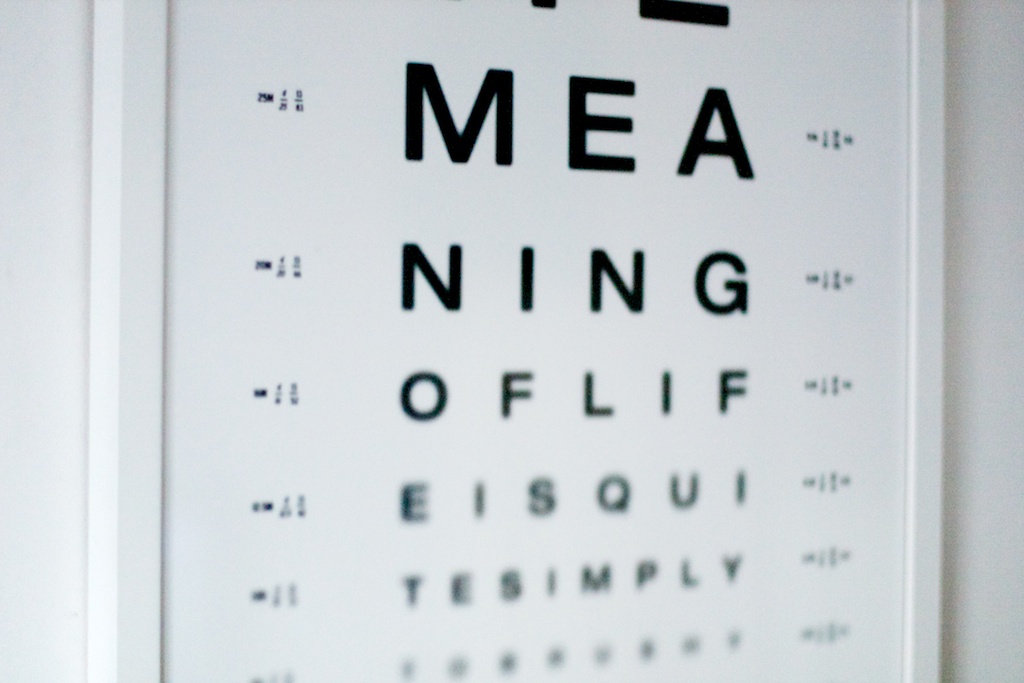
The Meaning of LIfe

meaning-of-life-37When you first see the word, you may wonder if you will remember how to spell it.  When you try to read it, you may think you will mispronounce it.  The word is Ecclesiastes, and it is one of the Wisdom books of the Old Testament.

Ecclesiastes is a record of Solomon’s attempt to find the meaning of life.  When you get to the last chapter of the book, Solomon makes a summary statement:  “Now all has been heard; here is the conclusion of the matter: Fear God and keep his commandments, for this is the whole duty of man. For God will bring every deed into judgment, including every hidden thing, whether it is good or evil.”

There are some places in this book where you will find a phrase is repeated several times.  The fourth chapter is a good example:

  • 4:1: “the oppression that is done under the sun”
  • 4:3: “the evil work that is done under the sun”
  • 4:7: “I saw vanity under the sun”

The three repeated words, “under the sun,” reveal the key to Solomon’s frustration.  His attempt to find meaning in life was difficult.  “Under the sun” places the emphasis on a horizontal perspective at the expense of the vertical dimension.

What Solomon initially failed to grasp, was firmly gripped by Paul.  Notice how he accentuates the vertical perspective of the Christian life: “Seek those things which are above, where Christ is, sitting at the right hand of God.  Set your mind on things above, not on things on the earth  (Colossians 3).”

Paul’s use of the word “above” calls attention to the vertical perspective and contrasts it to the “things on earth,” or the horizontal realm.  Which one of these orientations guides you?

The answer to this question is found in what you wear:  What have you put off and what have you put on?

  • Paul said you should, “Put off all these: anger, wrath, malice, blasphemy, filthy language out of your mouth. Do not lie to one another, since you have put off the old man with his deeds.
  • Once you have put off the horizontal, you are ready to put on the vertical: “Put on the new man who is renewed in knowledge according to the image of Him who created you.”

There were times when I was a kid that I would frustrate my parents and they would ask:  “What in the world do you think you’re doing?”  That’s not a question you need to answer; however, you might think about this:  How are you living under the sun, and what have you put off and put on?

It’s The Time of Your Life

google-calendar_logoBeing on time and staying on schedule could be a difficult task for me, but it isn’t.  Google Calendar is an application I use every day to help me manage my life.

Each morning when I start my day, I have an email from Google waiting on me.  When I open it, I find my schedule for that day.  I don’t have to wander through the day wondering what I am supposed to do.  Thanks to Google, I already know.

The person who waits for the right time to do something fails to realize that time is a precious commodity that quickly rots when wasted and spoils the opportunity of the moment.  It doesn’t make any difference if you think you are living in the best of times or the worst of times, this is the only time you have—it is the time of your life.

You have 60 minutes in every hour; 1,440 of them every day; 10,080 of them every week; and a whole bunch of them in a year.  If you will manage the minutes of your life, the hours will take care of themselves.

The time of your life is so important, the psalmist said:  “Teach us to number each of our days, so that we may grow in wisdom (90:12).”  The idea is not that you assign a number to each day of your life.  The concept is that you get the most out of each day, so you are living it for the glory of God.

Carl Sandburg captured the essence of this discussion when he said:  “Time is the coin of your life. It is the only coin you have, and only you can determine how it will be spent. Be careful lest you let other people spend it for you.”

It is the time of your life, so spend it wisely.

Are Your Defined and Confined by Fear?

break_free-e1350561498868Do you easily connect with the principles of the New Testament, but neglect the precepts of the Old Testament?  If you do, you are like many other people who read the Bible.

When you are a stranger to the Old Testament, there’s the danger of missing key concepts.  If you don’t read the writings of Moses, I’m afraid you’ll miss the “fear not” statements of God:

  • Genesis 15:1: “Fear not, Abram! I am your shield and the one who will reward you in great abundance.”
  • Genesis 26:24: “Do not be afraid, for I am with you. I will bless you.”
  • Exodus 14:13: “Do not fear! Stand firm and see the salvation of the Lord that he will provide for you today.”
  • Deuteronomy 3:22” “Do not be afraid of them, for the Lord your God will personally fight for you.”
  • Deuteronomy 31:8: “The Lord is indeed going before you—he will be with you; he will not fail you or abandon you. Do not be afraid or discouraged!”

Are you defined and confined by the fear of what “might” happen?  If so, you’ve forgotten that you’re designed to be inclined to God’s promises.  Peter challenged a congregation of persecuted people,  “Cast the whole of your care [all your anxieties, all your worries, all your concerns, [once and for all] on Him, for He cares for you affectionately and cares about you watchfully (I Peter 5:7 ~Amplified Bible).”

The next time you find yourself in a pickle because your faith has turned fickle, reflect on this potent proverb from Solomon:

“Dear friend, guard Clear Thinking and Common Sense with your life; don’t for a minute lose sight of them. They’ll keep your soul alive and well, they’ll keep you fit and attractive. You’ll travel safely, you’ll neither tire nor trip. You’ll take afternoon naps without a worry, you’ll enjoy a good night’s sleep. No need to panic over alarms or surprises, or predictions that doomsday’s just around the corner, because God will be right there with you; He’ll keep you safe and sound.  (Proverbs 3:21-26 ~The Message).”

Weighing Your Options

download (1)In a post I made to this blog last week, I wrote about character and reputation.  I cited Romans 5, and I called your attention to a cause and effect link:  “Suffering produces endurance, and endurance, character, and character, hope.”

Over the weekend I reflected again on the words of Paul, and I remembered a story that Billy Graham tells.  It’s a good illustration of how God can use the suffering you encounter in your life.

The incident occurred during the Great Depression, and Graham spoke of a friend who had lived a life of hardship.  The man had lost his job, his wife, his home, and his fortune.  This Christian could not comprehend the purpose of his suffering, but he didn’t let his trials shake his faith.

While walking by a church one day, he stopped to watch some masons as they worked.  One of the men was chiseling a triangle shaped piece of stone, and Graham’s friend asked him: “What are you doing?”  The workman replied:  “See that little opening near the top of the spire? I’m chiseling this stone down here, so it will fit in just right up there.”

As Graham’s friend walked down the street, his eyes filled with tears and he smiled.  He realized that God was using his suffering as a chisel down here, so some day he would fit in up there.

Paul said:  “For I consider that our present sufferings cannot even be compared to the coming glory that will be revealed to us (Romans 8:18).

When your heart aches, I hope you will find some comfort in the promises of Psalm 27:1, 14: The Lord is my light and my salvation; Whom shall I fear? The Lord is the strength of my life; of whom shall I be afraid?  Wait on the Lord; be of good courage, and He shall strengthen your heart; Wait, I say, on the Lord!

I’ll close with this thought:  When you wait on the Lord, He lifts the weight of the world.

Is That Kitty A Cat?

When discussing the pros and cons of some item or subject matter, you want to make sure you are not comparing apples to oranges.  I was reminded of this last week when working a crossword puzzle.  The clue was “kitty.”  The answer required a three letter word, so I wrote “cat.”  After working other parts of the puzzle, I came to the conclusion that “cat” was wrong and the correct answer was “pot.”cross-eyed-cat

The synapse in my brain had created a visual image of an animal, but the clue was correlated with gambling:  When you place a bet, you add to the “kitty” or the “pot.”

I asked myself:  “If the clue had been “pot,” what would I have answered?  I doubt I would have associated it with gambling.  Some people may have thought of marijuana or weed, but since I like to eat, I would have thought of pots and pans for cooking.

When I think of “pot,” I also think of Jesus.  He stirred the theological pot with each one of His “I Am” statements.  Whenever Jesus said “I AM” He was making a Messianic claim, and this angered the Pharisees:

  • “I am the bread of life” (6:35, 41, 48-51)
  • “I am the light of the world” (8:12, 9:5)
  • “I am the door of the sheep” (10:7, 9)
  • “I am the good shepherd; the good shepherd gives his life for the sheep” (10:11,14)
  • “I am the resurrection and the life” (11:25)
  • “I am the way, the truth, and the life” (14:6)
  • “I am the true vine” (15:1,5)

Jesus also brought the pot to a boil when He overruled the powers of nature and performed the following miracles:

  • Jesus changed water into wine at a wedding feast (2:1-12).
  • Jesus healed the son of a royal official (4:43-54).
  • Jesus healed a man who had been paralyzed for 38 years (5:1-15).
  • Jesus multiplied seven loaves and fishes to feed the 5,000 people (John 6:1-5).
  • Jesus walked on water and calmed the waves to rescue his disciples (6:16-24).
  • Jesus healed a man born blind, giving him sight (9:1-12).
  • Jesus raised Lazarus from the dead (11:1-44).

There are people today who will say Jesus was a good man and a religious teacher, but they deny that He is the Son of God and Savior of the world.  There’s a problem with this line of thinking.  A good man and a religious teacher with high morals would not make false claims about the essence of his being.

This leaves three options.  Either Jesus was a liar, a lunatic, or He is the Lord.  If I had to throw my chips into the “kitty” or the “pot,” I’d go all in on Jesus:  He’s my Lord and Savior!

A Radical Life and a Twinkling Star

starry sky at nightRadical is the title of an interesting book written by David Platt. It contains several compelling statements that have a Great Commission orientation:  Platt said, “Jesus has not given us an effortless step-by-step formula for impacting nations for His glory.  He has given us people.”

The closest thing to a formula is found in Matthew 28:18-20 and Acts 1:8,  but these verses are more of a road map than they are a formula. To have any hope of accomplishing the Commission Christ gave His church, we need to live the life of a disciple.

Platt said Jesus has given us people, and we are to: “Live for them. Love them, serve them, and lead them.  Lead them to follow me, and lead them to lead others to follow me.  In the process you will multiply the gospel to the ends of the earth.”

Because we are living in the age of “me, myself, and nobody else,” this concept is contrary to what many people practice.  With this mindset, it is no wonder that society does not comprehend principled New Testament living.

Is there a glaring omission of the Commission and its principles in your life?

  • Are you living a selfish or selfless lifestyle?
  • How is God’s love for the world seen in your ministry to others?
  • Does your example impede, or does it lead people to Jesus?
  • What about your conversation? Does it deny or multiply the power of the gospel?

If you live, love, and lead people with a servant’s heart, you can identify with the words of Daniel 12:2-3:  “And many of those who sleep in the dust of the earth shall awake, some to everlasting life, and some to shame and everlasting contempt.  And those who are wise shall shine like the brightness of the sky above; and those who turn many to righteousness, like the stars forever and ever.”

Does your life brightly shine for God’s glory?

29 More Days

2010_01_21_blog_seed_catalogs-008With the foul weather, frigid temperatures, and bone-chilling wind, it’s hard to believe that the first day of Spring is about a month way.  Proof of this is the frequent appearance of seed catalogues in my daily mail.

Bright red roses and other fragrant flowers will soon be in full blossom.  As the buds of these plant begin to form, gardeners will sniff about them in anticipation of their pleasing aroma.

The scent of a flowering plant is designed to attract insects for the purpose of pollination.  In 1953 chemists could only recognize 20 of the chemicals in a rose’s fragrant bouquet, but now they can identify 1,700 different scent compounds.

The sweet fragrance of flowers reminds me of a couple of verses in the Bible:

  • In Revelation 5:8, John speaks of “golden bowls full of incense, which are the prayers of the saints.”
  • In Ephesians 5:1-2, Paul encourages us to “be imitators of God, as beloved children, and to walk in love, as Christ loved us and gave himself up for us, a fragrant offering and sacrifice to God.”

I’ll leave you with a question to consider:  Are you know for raising a stink or for a life that is “a fragrant offering and sacrifice to God?”

Delightful and Frightful Goodness

GhirardelliChocolate-4You may want to take a look in your rear view mirror to assess the bottom line aspect of Valentine’s Day.  When I wrote Friday’s blog, I didn’t have the heart to do a lead story on the lead contamination of chocolate. An examination of this delightful treat may have frightful consequences.

A California based watchdog group has released a study concerning your chocolate yearning. An independent lab examined 42 products, and it found lead and/or cadmium in 26 that were above the levels considered safe by California standards.

The findings of the report have been disputed by several people:

  • Jeff Beckman, director of corporate communications for Hershey, has said: “People have been eating cocoa and chocolate for centuries with no evidence of a single incident of concern regarding these naturally occurring minerals.”
  • Susan Smith of the National Confectioners Association offered this rebut to the study: “Heavy metals such as lead and cadmium are naturally-occurring elements found in the Earth’s crust. Since these elements are present naturally in the soil and water where plants are grown, there are unavoidable traces occurring in virtually all foods, including fish, meats, grains, fruits and vegetables. Like these other foods, cocoa beans, one of the main ingredients in chocolate, may also contain small amounts of heavy metals depending on the natural conditions in which it is grown.”

Diets have been debated since the creation of Adam and Eve.  If you remember, there was quite a discussion over what could or could not be eaten in the Garden of Eden.

There was also a controversy in Corinth concerning what was permissible to eat, and Paul said:

“I’m not going to walk around on eggshells worrying about what small-minded people might say; I’m going to stride free and easy, knowing what our large-minded Master has already said. If I eat what is served to me, grateful to God for what is on the table, how can I worry about what someone will say? I thanked God for it and he blessed it!

So eat your meals heartily, not worrying about what others say about you—you’re eating to God’s glory, after all, not to please them. As a matter of fact, do everything that way, heartily and freely to God’s glory. At the same time, don’t be callous in your exercise of freedom, thoughtlessly stepping on the toes of those who aren’t as free as you are. I try my best to be considerate of everyone’s feelings in all these matters; I hope you will be, too.” ~The Message, I Corinthians 10

There is no need for a state of gloom when you consume that piece of dark chocolate because most research speaks of its benefits.  A 100 gram bar of dark chocolate with 70-85% cocoa contains:

  • 11 grams of fiber.
  • 67% of the RDA for Iron.
  • 58% of the RDA for Magnesium.
  • 89% of the RDA for Copper.
  • 98% of the RDA for Manganese.

My conclusion?  “Please pass me another Ghirardelli.”