Like A Satin White Snowflake

sad-snowmanWhen I walk down the street or press my way through a busy mall, it seems people are as adrift as a satin white snowflake that’s blown by a fierce wind.  They participate in a vigorous celebration of an annual winter holiday that is a time of jubilation, but they have never experienced that infusion of joy that Peter described as being “unspeakable and full of glory (I Peter 1:8).”

Paul wanted the saints at Ephesus to embrace a joy-filled relationship with Christ, so he prayed for them to “have strength to comprehend with all the saints what is the breadth and length and height and depth, and to know the love of Christ that surpasses knowledge, that you may be filled with all the fullness of God” (Ephesians 3:18-19).

The joy and fullness of Christ is the essence of the incarnation, and as John said:  “The Word became flesh and dwelt among us, and we beheld His glory, the glory as of the only begotten of the Father, full of grace and truth . . . and of His fullness we have all received, and grace for grace (John 1:14, 16).

When I observe people today, I wonder if their holiday happenings are a celebration of this grace and truth or an aberration of its substance.

When you look at the faces and into the eyes of the people you meet on the street:  What do you see?  Is it a lighthearted twinkle or a heavyhearted wrinkle?   Is it the glad refrain of the fullness of Christ or is it the sad disdain of the world’s dullness?

What’s the difference between the two?  Isn’t the incarnation the demarcation of wholeness and hole-ness?  Christmas is a contrast between the love of God and the lack of the world. Paul captured this in his letter to the Colossians:

  • In him the whole fullness of deity dwells bodily (Colossians 2:9).
  • In him all the fullness of God was pleased to dwell (Colossians 1:19).
  • In him are hidden all the treasures of wisdom and knowledge (Colossians 2:3).

The joy, peace, and fullness that you hunger for will never be found in a neatly wrapped package beneath a tree:  It is only found in the baby who was born on Christmas day.

Peace On Earth

Christmas Bells 11516When Jesus came to this world, it was not to address the peccadillo needs of a few, but to fill the chasm of sin that separated man from God.  He did not come to just please the whims and fancies of the human race, but He came to pacify of the righteous demands of a holy God.

His coming was full of promise; yet, the people to whom He came rejected Him.  John said:

He came into the world—the world he had created—and the world failed to recognize him. He came into his own creation, and his own people would not accept him. Yet wherever men did accept him he gave them the power to become sons of God. These were the men who truly believed in him, and their birth depended not on the course of nature nor on any impulse or plan of man, but on God (JB Phillips)

Whenever I read the verses above, I am intrigued by four words:  “the power to become.”  When people accept Jesus, not an idea nor a philosophy, but the person of Christ, they receive “the power to become” a child of God.  This spiritual transformation is the real hope of the Christmas story.

At this time each year I see people go to great expense to decorate their house–to transform it from the ordinary ho hum to an extraordinary display of flashing lights; yet they still miss the meaning of Christmas.  While they are willing to pay homage to a diorama of Christmas, they fail to worship the Christ of Christmas.

Longfellow wrote the words to the song I Heard the Bells on Christmas Day.  In the third stanza of the song, he stated the condition of mankind without Christ:

 And in despair I bowed my head:

“There is no peace on earth,” I said,

“For hate is strong and mocks the song

Of peace on earth, good will to men.”

As you celebrate Christmas this year, remember peace on earth is only possible because a piece of Heaven was born in a manger.

Today is Christmas

This is the time of year when the mystery of the Old Testament prophets is understood in the fulfillment of that pinnacle of prophecies—the incarnation of Christ.  The birth of Jesus is the axiom of Christianity.

Wonderful-Counselor

Today is Christmas day, and it is the day when the dignity of Deity was clothed in human flesh and was born in an insignificant manger.  Today we celebrate the birth of the Magnificent Messiah and the Savior of the world, and we can truly sing, Joy To The World.

Merry Christmas!

The Goats of Christmas

Lamb of God, Bread of LifeI’ve always had a strong affection for books.  Even when I was a child, I would ride my bicycle the dozen or so blocks to the library several times a week.  It is this affinity for books that lured me into Barnes and Noble yesterday.

As I elbowed my way through the throng of seasonal shoppers, I wondered:

  • How many of these people revere the holiday but never adhere to the Savior?
  • How many serenade the season, but never offer an accolade to the Almighty?
  • Has the citadel of Christmas moved from the manger to the mall?

Celebrating Christmas without Jesus is like going to the goat’s house for wool—you might have the semblance, but you’ll never have the warmth.

An Invitation: Come Emmanuel

imagesOne characteristic of the Christmas season that I really enjoy is the music, and one of the classics is O Come O Come Emmanuel.  Whenever I sing the chorus of this song, it has the sound of a long-awaited hope that is realized and claimed:  Rejoice! rejoice! Emmanuel shall come to thee, O Israel.

As I think of this song, I think of three other sections of Scripture that contains the word “come.”

  • Isaiah 1:18:  Come now, and let us reason together,” Says the Lord, “Though your sins are like scarlet, They shall be as white as snow; Though they are red like crimson, They shall be as wool.
  • Matthew 11:28-30:  Come to Me, all you who labor and are heavy laden, and I will give you rest.  Take My yoke upon you and learn from Me, for I am gentle and lowly in heart, and you will find rest for your souls.  For My yoke is easy and My burden is light.
  • Revelation 22:17:  The Spirit and the bride say, “Come!” And let him who hears say, “Come!” And let him who thirsts come. Whoever desires, let him take the water of life freely.

Isaiah’s use of the word speaks of repentance of sin and regeneration (salvation); Jesus uses it in the sense of a relationship; and, in the Revelation it speaks of our final redemption.

The story of Christmas is the gift of Jesus.  He came to earth, so you could come to God.  Listen to the words of O Come O Come Emmanuel, and focus on the hope, the invitation  and the sound of victory in the word come.

incarnation-header-600x200-2

Under the Cloak of Darkness

into-the-lightHis name meant “victory of the people,” but Nicodemus was living a life of spiritual defeat that left him thirsting for something more.   His religious zeal had left him parched and perched.  The dryness of the religion he had practiced from the time of his birth had withered his soul, and the conundrum of messianic proportions left him sitting in a precarious position.

It was within the framework of this nodus that Nicodemus went under the cloak of darkness to find Jesus and said: “Rabbi, we know that You are a teacher come from God; for no one can do these signs that You do unless God is with him.”

Even though Nicodemus could see the signs he was blind to his sins, so Jesus went straight to the heart of the matter:  “I say to you, unless one is born again, he cannot see the kingdom of God.”

Like many people today, Nicodemus thought he had lived a good live.  After all, he was a Pharisee and even a member of the ruling council—the Sanhedrin.  He was no religious malcontent, but he questioned the content of Jesus’ discourse.

If he followed Jesus what course would his life take?  Would it would lead him away from Judaism and the prestige and prominence of his position?  Was he ready to sacrifice everything that he had worked so hard to achieve?

Nicodemus decided to wander away to ponder and pray.  I believe Nicodemus re-examined the Messianic prophecies and they validated the claims of Jesus.

When the third chapter of John comes to a close, Nicodemus is never head of again until Jesus is crucified.  Then he came out of the darkness to identify with Jesus and to prepare the body of His Lord for burial.

Which stage of Nicodemus’ life best describes you?  Is it the under-the-cloak-of-darkness Nicodemus, the closet-Christian Nicodemus, or is it the stand-up-and-stand-out for-Jesus Nicodemus?

Suffering and the Sovereignty of God

trustGodWhen people are confronted with the existence of evil, some will question the existence of God. When this happens, I encourage people to consider the nature of evil.  Evil and Good are value judgments, and as such, they must be measured against a morally perfect standard.  If some act deviates from this standard, it is deemed to be evil.

Early in his life, C.S. Lewis rejected the idea of God.  After a thorough investigation, he made an interesting statement:   “My argument against God was that the universe seemed so cruel and unjust. But how had I got this idea of just and unjust? A man does not call something crooked unless he has some idea of a straight line.”  Lewis also made the point that a portrait is a good or a bad likeness depending on how it compares with the “perfect” original.

Any time you feel intense physical or emotional pain, you may find yourself asking the question:  “Why?”  Randy Alcorn offers an excellent discussion of suffering and the sovereignty of God in his book If Good Is Good:  Why Do We Hurt?  

God is both loving and sovereign . . . Knowing this should give us great confidence that even when we don’t see any redemptive meaning in our suffering, God can see it—and one day we will too. We can trust that God has a purpose for whatever he permits. We are limited to time; God is not. From the perspective of a timeless God, the distant future—when justice is fully granted, and evil and suffering are gone—is as real as the present. What he knows he will ultimately accomplish through suffering, for his glory and our good, is not merely a possibility but a reality he can already see, in all its fullness ~Randy Alcorn

Immorality, pain, suffering, evil, and ethical failures are, according to some people reasons to question the presence of a loving God.  I strongly disagree with this assessment, and  I believe they help to prove the existence of God.  I have written about this in the past, and encourage you to read my post: Why God?

My words are neither nonsensical nor vacuous, they are the thoughts of one who has walked the path of suffering and loss on more than one occasion, and I still believe in the goodness of God.


The $27,673 of Christmas

business_library_12_days_of_christmasIt may be a “man thing,” but shopping is usually at the bottom of my I-just-gotta-do-it list, and it will never find a place on my bucket list.  According to the PNC Wealth Management Christmas Index, if you were to go on a shopping spree based on the classic song, The 12 Days of Christmas, the gifts would cost you $27,673.

One gift that didn’t make the list is so uniquely spectacular that Paul said, “Thanks be unto God for his indescribable  gift (II Corinthians 9:15).”  This is the gift that the prophet Isaiah spoke of over 700 years before Jesus was born:

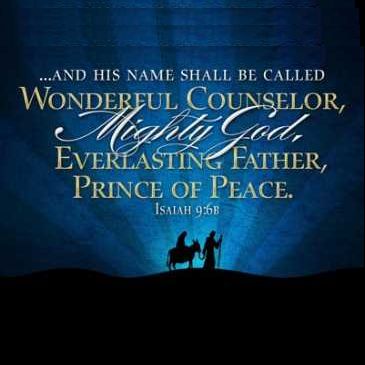
For unto us a Child is born, unto us a Son is given; and the government will be upon His shoulder. And His name will be called Wonderful, Counselor, Mighty God, Everlasting Father, Prince of Peace                                                                                    ~Isaiah 9:6

Isaiah’s prophecy would be fulfilled in the words of John 3:16: “For God so loved the world that He gave His only begotten Son, that whosoever believes in Him should not perish, but have everlasting life.”

So you see, the real price of Christmas is not the sum total of  $27,673, it is the Son total of one life that paid the price of salvation—”You get what is coming to you when you sin. It is death! But God’s free gift is life that lasts forever. It is given to us by our Lord Jesus Christ (Romans 6:23 ~NLV).”

Peter encouraged a group of severely persecuted Christians to recognize and give thanks for the presence of Jesus:

Praise the God and Father of our Lord Jesus Christ. According to His great mercy, He has given us a new birth into a living hope through the resurrection of Jesus Christ from the dead and into an inheritance that is imperishable, uncorrupted, and unfading, kept in heaven for you.  You are being protected by God’s power through faith for a salvation that is ready to be revealed in the last time.  ~1 Peter 1:3-5

If you see Christmas as a series of sales Black Friday and Cyber Monday sales, you denigrate it to the status of meaningless merchandise.   The onus is on us, you and me, to keep Christ foremost in this season of giving.

As you prepare for your celebration of God’s miraculous gift, I encourage you to remember that, “Every good gift and every perfect gift is from above, and comes down from the Father of lights (James 1:17).”

Vision: The Power of Sunlight or the Son’s Light

In June of 2011, the New York Times asked the question:  “Why is nearsightedness so common in the modern world?”  The article went on to report that, “In the early 1970s, 25 percent of Americans were nearsighted; three decades later, the rate had risen to 42 percent . . . “

Research by The Ohio State University College of Optometry suggests that children who are genetically predisposed to nearsightedness can improve their chances of avoiding eyeglasses through an appropriate amount of exposure to sunshine, and all that is needed is about 14 hours a week.

The lead researcher, Donald Mutti  said:  “Between the ages of 5 and 9, a child’s eye is still growing, and sometimes this growth causes the distance between the lens and the retina to lengthen, leading to nearsightedness.”  Mutti believes that “different types of outdoor light may help preserve the proper shape and length of the eye during that growth period.”

Nearsightedness can be a problem spiritually as well as physically.  This was the case in Psalm 73:

“God is truly good to those whose lives are pure. But my feet had almost stumbled. They had almost slipped because I was envious of arrogant people when I saw the prosperity that wicked people enjoy.”

The Psalmist had subrogated an immediate focus for an eternal perspective which left him with a case of pernicious nearsightedness.  This is a spiritual malady that finds its remedy not in sunlight, but in the Son’s light:  “When I tried to understand this, it was too difficult for me. Only when I came into God’s holy place did I finally understand (Psalm 73:16-17).”

Peter spoke of the transforming power of the Son’s light:

His divine power has bestowed on us everything necessary for life and godliness through the rich knowledge of the one who called us by his own glory and excellence.  Through these things he has bestowed on us his precious and most magnificent promises, so that by means of what was promised you may become partakers of the divine nature, after escaping the worldly corruption that is produced by evil desire.  For this very reason, make every effort to add to your faith excellence, to excellence, knowledge; to knowledge, self-control; to self-control, perseverance; to perseverance, godliness; to godliness, brotherly affection; to brotherly affection, unselfish love. For if these things are really yours and are continually increasing, they will keep you from becoming ineffective and unproductive in your pursuit of knowing our Lord Jesus Christ more intimately.  But concerning the one who lacks such things—he is blind.  That is to say, he is nearsighted, since he has forgotten about the cleansing of his past sins ~2 Peter 1

The best cure for a nearsighted, ineffective and unproductive life  is to spend more time basking in the warmth of the Son’s light.

How Do You Measure Life?

hwymyl_400x400Today is the day after Thanksgiving, and one of the discussions you will have today will be what you did yesterday—Thanksgiving as an event will be on your talk-turkey-agenda.

  • What did you do for Thanksgiving yesterday?
  • Where did you go for Thanksgiving?
  • How many people came to your house for Thanksgiving?
  • I ate way too much.
  • I had to sample a piece of every pie.

As you rehearse and digest the events of yesterday, notice the tenor of the discussion:  Is it geared more towards the quality of the day or the quantity of the food?  Was there any “thanks” in your Thanksgiving Day?

When he wrote to the church at Corinth, Paul made sure quality and quantity were center stage when he served his soliloquy on a life well-lived:

According to the grace of God given to me, like a skilled master-builder I laid a foundation, but someone else builds on it. And each one must be careful how he builds.  For no one can lay any foundation other than what is being laid, which is Jesus Christ.  If anyone builds on the foundation with gold, silver, precious stones, wood, hay, or straw, each builder’s work will be plainly seen, for the Day will make it clear, because it will be revealed by fire. And the fire will test what kind of work each has done.  If what someone has built survives, he will receive a reward.  If someone’s work is burned up, he will suffer loss. He himself will be saved, but only as through fire. ~I Corinthians 3:9-10 (JB Phillips)

Corinth was a hedonistic city of commerce and many of the Christians were living the epicurean life.  Their lives were lived in the quest for fleshly quantity and not spiritual quality.

As Peter Marshal once said; “The measure of life is not its duration, but its donation.”  Do you focus more on the “who” you are living for or on the “what” you are pursuing?

Here’s a final thought for you to chew on:  “The quality of a person’s life is in direct proportion to their commitment to excellence, regardless of their chosen field of endeavor (Vince Lombardi).”