Communication: Do You WiFi or Wee-Fee?

3-golden-rules-for-team-communicationDo you pay a Wee-Fee for your WiFi, or do you hee-hee when some people say Wee-Fee?  Most people reading this blog know that WiFi  is the wireless networking technology that uses radio waves to provide wireless high-speed connection to the internet.

What you may not know is that about 7% of the people living in Arkansas pronounce WiFi as Wee-Fee; however, they are not alone.  In fact, there are several countries that have a significant number of people who opt for the Wee-Fee pronunciation of the word:

  • Spain 49.3%
  • France 46.1%
  • Hungary 41%
  • Belgium 34.4%
  • Netherlands 33.7%

The meaning of WiFi does not change if it is pronounced Wee-Fee, but in some situations a mispronounced word can lead to heated circumstances.

I clearly remember an unclearly spoken word that created a state of confusion.  I was 18, and was asleep on the top floor of an old Air Force barracks when a backwoods sergeant ran down the hall shouting, “Far! Far!”  I thought:  “Far?  How far am I supposed to go and in which direction?”

“Far” took on new meaning and significance when the smell of burning wood began to find its way into my room.  I realized the sergeant with the hick-accent had not been shouting “far,” but was yelling “FIRE!”

One of the basic rules of communication is found in the acronym KISS (Keep It Simple Stupid).  The Apostle Paul could be profoundly simple in the way he stated truth, and he kept it simple and clear in Romans 6:23:  “The wages of sin is death, but the gift of God is eternal life through Jesus Christ our Lord.”

The wages of your sin cost God more than just a wee-fee, it cost Him the death of His son on the cross of Calvary.

Your WiFi might be what directs you to the internet, but it’s Jesus who connects you to Heaven.  Jesus said:  “I am the way the truth and the life no one comes to the Father except through me.”



The Iconic Brain or Do Smartphones Make You Smarter?

brain-injury

In the world of information technology the term icon is about as outdated as a dial phone.  In the not so distant past, the images on the screen of your computer were called “ICONS.”  From a religious perceptive, the word means “a window to heaven.”  From the viewpoint of technology “ICON” was used in reference to a window to an application.

The ICON has been buried in the bone yard of outdated computer technology and replaced by the APP.  The birth of the APP has walked in step with the proliferation of smartphones.

A story in US News & World Report has examined a study on the correlation between finger and thumb dexterity and the development of the sensory processing component of your brain while using a smartphone.  Each part of your body, from the top of your head to the tip of your toes, “has a corresponding ‘processing area’ in the emotional center of the brain, a region known as the somatosensory cortex.”

This function of the brain is often referred to as “sensory processing,” and it is the ability of the brain to interpret the information it has received, so it can prioritize and emphasize the components of the data; decide how to understand what is going on; and, decide what you will do based on the information received and processed.

Researchers used an EEG to study the brain activity of 37 people while they were using their cell phones:

  • 26 were using touch-screen smartphones
  • 11 were sing traditional cellphones with keypads

The study was able to distinguish between the length of time the subject had owned a smartphone and the frequency with it had been used.  The change in the brain was associated more with how frequently the smartphone was used over a 10 day period than just owning the phone and using it periodically.

Here’s a thought or two to keep you thinking:

  • How can these findings be applied to your life?
  • Is it more important to pray for a long time every now and then or to have short frequent prayers every day?
  • How does your prayer life mold and reshape the sensory processing region of your brain?

Perhaps this is one of the reasons Paul instructed the Christian to “pray without ceasing.”


The Habit of Excellence

Ever wonder why we keep doing the  things that we know we should not do and do not want to do?  I give you a little 5 letter answer to this encyclopedic problem–habit.

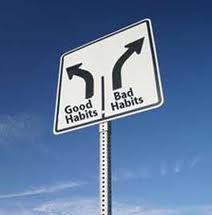
I believe it was Aristotle who said:  We are what we repeatedly do. Excellence, then, is not an act, but a habit.  Repetitious behavior is a coin with two sides:  good habits and bad habits. 

Because they are so ingrained in our lives, habits are often performed unconsciously.  This means we give little thought to some of the things we do.  This auto-pilot mentality is either a wonderful servant or a worrisome master. 

Research has shown that old habits appear to lose some of their power when new habits begin to replace them.  The new habit is a positive detour that bypasses the old rut.  

According to Ryan and Markova we form new habits by considering our three zones of existence: comfort, stretch and stress. Comfort is the realm of existing habit. Stress occurs when a challenge is so far beyond current experience as to be overwhelming. It’s that stretch zone in the middle — activities that feel a bit awkward and unfamiliar — where true change occurs.

Any time we try to kick a habit and develop a new skill, we can expect to experience some discomfort.  If you are right-handed, try writing or eating with your left hand.   Unless you are ambidextrous, it will feel a little odd or clumsy.

The same is true with any change in your routine.  At first it will seem awkward.  Several years ago I was told that I should substitute rice or almond milk for regular dairy milk.  The first time I tasted the substitute, my tastebuds shouted:  YUK!  I did a quick reframe of my response and said:  It isn’t milk, but it tastes pretty good for what it is.  And, I’ve done fine with it ever since.

New habits are not developed overnight.  At a minimum, I suggest 40 days of consistent practice as a start and for long-term success I think 3 months dedicated to the new routine is important.

Paul contrasted the habits of the flesh and the habits of the Spirit in Romans 6: I am using an example from everyday life because of your human limitations. Just as you used to offer yourselves as slaves to impurity and to ever-increasing wickedness, so now offer yourselves as slaves to righteousness leading to holiness.  When you were slaves to sin, you were free from the control of righteousness.  What benefit did you reap at that time from the things you are now ashamed of? Those things result in death!  But now that you have been set free from sin and have become slaves of God, the benefit you reap leads to holiness, and the result is eternal life.  For the wages of sin is death, but the gift of God is eternal life in Christ Jesus our Lord. 

I hope this thought keeps you thinking:  Where in your life do you need to intervene, so you can begin a healthy new routine?