Friday: A Day of Signifiance

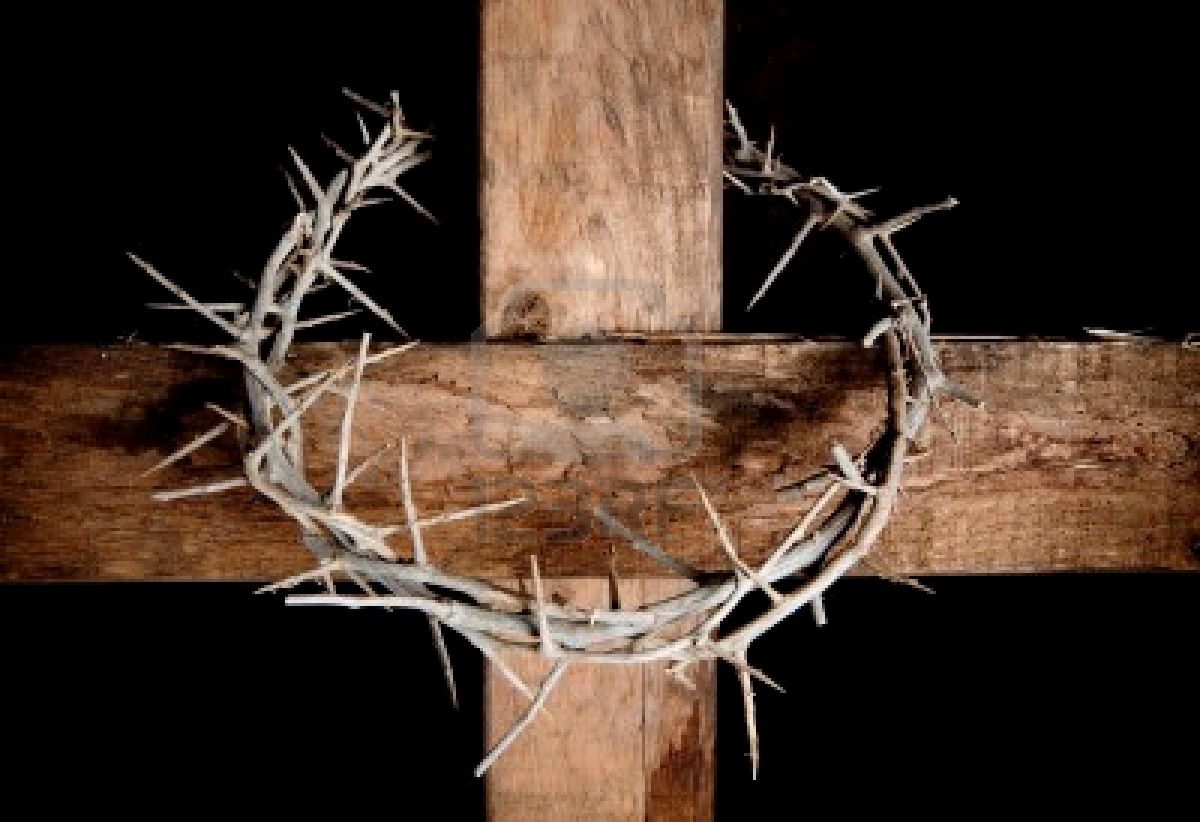
6187141-crown-of-thorns-hung-around-the-easter-crossIf you could travel back in time to history’s most important Friday and relive that day in 33 AD, what would you hear as you walked the streets of Jerusalem? The city had swelled in size because it was Passover, but the conversation was not the annual rites at the Temple.  No, that significant sacrifice was overshadowed by the crucifixion of Jesus.   As people contemplated the events, they exclaimed:  Finished!  Epic life ended!  Last chapter of a miraculous life has closed with a tragedy!

The Messiah you have been following has been nothing more than a grandiose dreamer with Messianic aspirations, and your dream has ended in a nightmare.  In stunned silence and in a state of shock, you wonder:  What now?  How could all of this happen?  How could so many people have believed a lie?

A cloud of despair hangs heavily on your doubting heart as you try to make sense of the disaster that has disrupted your life.  Friday has been an arduous day, but at least there has been a lot of activity.  When you woke up Saturday morning, you hoped that yesterday was just a bad dream; however, when you looked into the sunken eyes of your fellow disciples, reality buckles your knees:  Your Hope has been crucified; Jesus is dead; and, Saturday drags on and seems like it’ll never end.

From that Friday of 33 AD, to the Friday of today, there is a perceptional gap that is every bit as deep as it is wide in years.  All the disciples of 33 AD had was a form of spiritual PTSD and the stench of death, but you have the benefit of history.

You know the story doesn’t end with that dramatic death on the cross. You know there is an encore to what the disciples thought was the final Act, and it was announced to those few devoted women who went to the tomb:  He is not here; He has risen!

The fact of the resurrection turned men of cowardly hearts into courageous soldiers of the cross, and in a few short years the infant church shook Rome.  This is the mobilizing power of the resurrection and the proof of what can happen when a group of people are infused with hope . . . people just like you.

I encourage you to share the hope and live the message as you celebrate the resurrection of Jesus this Sunday.

Who is Jesus?

easter01This is a momentous week in the life of the church.  Because it has been framed by two monumental events of history, it is the week traditionally referred to as “holy week.”

It’s a week that began with Palm Sunday, and it will end this Sunday with the celebration of Easter.  Palm Sunday is associated with the triumphal entry of Jesus into Jerusalem, and Easter is the joyful recognition of His resurrection.

There’s a three word question that was asked by those who observed Jesus on Palm Sunday. As He rode a white donkey through the narrow and dusty streets of Jerusalem, they asked:  “Who is this?”

The Gospel of John presents a group of witnesses that offer a line of testimony that answers this question:

  • John testifies that Jesus turned water into wine at the marriage supper of Cana.
  • The nobleman gives a detailed account of how Jesus simply spoke and his dying son was healed.
  • The man who had been crippled for 38 years jumps in the air and clicks his heels together to show the miraculous manner in which Jesus healed him.
  • The little boy holds up an empty lunch pail and says: “It had just enough food for my dinner, but Jesus blessed it and there was enough to feed 5,000 people.”
  • The seasoned fishermen relive the moment when they thought their boat was going to sink and they were going to drown: “The Master appeared out of nowhere, walked on the waves, commanded the water to be still, and we were saved.”

After listening to all the testimony, a man rises and says:  “May I speak?  I think my evidence is conclusive.  You see, I was dead, but somehow I heard the clear and loud voice of Jesus:  ‘Lazarus come forth,’ and I shook off the chains of death.  I’m living proof of who Jesus is.”

Who is this?  Jesus is:

  • The Alpha and the Omega, the beginning and the end.
  • The Bread of Life.
  • The Light of the world.
  • The Good Shepherd
  • The Way, the Truth, and the Life.
  • Resurrection and the life

Who is Jesus to you?

Your Piece of the World

03world-puzzleWhether you live in the USA, England, Europe, Africa, or Asia, there is one thing you hold in common.  You and the rest of humanity want peace in your piece of the world–certainly, this is the case in El Paso, Texas, and Dayton, Ohio this morning.

I know I’ve grown weary of all the protests, murders, shootings, and rapes that I see on the screen of my TV.  The headlines of the newspaper are depressing with stories of theft, scandals, and abused children.

Here is what I am going to do in my piece of the world today. Instead of being, “overcome by evil, I’m going to overcome evil with good (Romans 12:21).”  I am going to try my best to, “pursue the things which make for peace and the things by which one may edify another (Romans 14:19).”  J.B. Philipps translated this same verse in these words:  “Let us concentrate on the things which make for harmony, and on the growth of one another’s character.”

Will you join me and make this your goal for today:

  • I will pursue and concentrate on bringing peace to my piece of the world.
  • When confronted with the off-key and unkind remarks of others, I will try to bring harmony to the situation.
  • I will do my best to be a positive presence in the life of those I encounter.

So what in the world are you going to do today?  I encourage you to bring peace to your piece of the world.

The High Cost of Faith

google-analytics-demographicsThe closer a person gets to retiring, the more focused he is on making good investments.  All investment decisions are important–including those associated with faith and missions.

The findings of Gil Anger, concerning the work of Christian missionaries, shed some light on this question (Statistic Brain Research Institute):

  • There are 419,000 people who are classified as foreign missionaries.
  • There are 26 countries that do not allow missionaries.
  • 629 Billion people have never been evangelized.
  • $250,000,000 is spent annually on Christian foreign missionary work.

The four points above are focused on demographics and dollars.   Is this an accurate reflection on the high cost of faith?  I don’t think so.  To understand the value of sharing the faith, you need to think of more than just the cost of an arm and a leg—you need to consider the sacrifice of a life.

When he wrote to the church at Corinth, Paul reminded them: “You have been bought with a price: therefore glorify God in your body.”  The high cost of faith is seen in the immeasurable love of God for you.

When you begin to comprehend the full meaning of being “bought at a price,” I hope you will also grasp the fact that in return you are to “glorify God in your body.”    Paul may have had this in mind when he said:

My response is to get down on my knees before the Father, this magnificent Father who parcels out all heaven and earth. I ask him to strengthen you by his Spirit—not a brute strength but a glorious inner strength—that Christ will live in you as you open the door and invite him in. And I ask him that with both feet planted firmly on love, you’ll be able to take in with all followers of Jesus the extravagant dimensions of Christ’s love. Reach out and experience the breadth! Test its length! Plumb the depths! Rise to the heights! Live full lives, full in the fullness of God.God can do anything, you know—far more than you could ever imagine or guess or request in your wildest dreams! He does it not by pushing us around but by working within us, his Spirit deeply and gently within us.


Are You Eyesome or an Eyesore?

in_the_eyes_of_god_by_rainacornasusgirl-d652cziEyesome is a word that I had never seen or heard of until yesterday, and it means, “Pleasant to look at.” When I discovered its meaning, I thought of the words of Peter when he spoke of the “incorruptible beauty of a gentle and quiet spirit, which is very precious in the sight of God (I Peter 3:4).”

I see fewer eyesome people who are noted for their “incorruptible beauty” and “gentle and quiet spirits.” Instead, there seems to be a proliferation of people who proudly exhibit a spirit that is reckless and impetuous.  This sort of person is less eyesome and more of an eyesore with a spirit that is rude, crude and arrogant.

What can you learn when you focus your eye on some of the Scripture below?

  • In Ephesian 4:1-3, Paul said I “urge you to live in a way that is worthy of the calling to which you have been called, demonstrating all expressions of humility, gentleness, and patience, accepting one another in love. Do your best to maintain the unity of the Spirit by means of the bond of peace.
  • In his advice to young Timothy, Paul instructed him to “pursue righteousness, godliness, faith, love, patience, gentleness (I Timothy 6:11).”
  • Paul emphasized the importance of gentleness when he wrote to the church at Philippi: “Let your gentleness be known to all men (Philippians 4:5).”

To be perceived as more eyesome and less of an eyesore, I encourage you to give some thought to Psalm 90:17:  “Let the beauty of the Lord our God be upon us, and establish the work of our hands for us.”

The “beauty of the Lord” does not speak of any physical feature, but it does mean that God can make you an eyesome creature.  When His beauty is upon you, He will begin to develop the “incorruptible beauty of a gentle and quiet spirit, which is very precious” in His sight.

Blending In and Standing Out

panther_chameleon_yurimaru_2A recent article in Nature Communication reported on the unique ability of chameleons to adapt to their surroundings by changing their colors.  The article stated:  “Many chameleons, and panther chameleons in particular, have the remarkable ability to exhibit complex and rapid color changes during social interactions such as male contests or courtship.”

While most people are familiar with chameleons, researchers have discovered something new about this colorful lizard.  The ability of chameleons to change color is more than just manipulating their pigmentation.   They change color by actively tuning the positions of light-reflecting guanine nanocrystal cells that are embedded in their skin.

When I read this article, I thought:  “This is exactly what Paul did throughout his ministry.”  Chameleons change color to adapt to their surrounding and to benefit them in their social interactions, but this change doesn’t alter their basic constitution—they remain lizards.

Paul adapted his methods, but he never changed his message.  He emphasized different distinctives of the Gospel, so he could proclaim certain principles to specific segments of society.

Notice how The Message describes the chameleon ministry of Paul:

“Even though I am free of the demands and expectations of everyone, I have voluntarily become a servant to any and all in order to reach a wide range of people: religious, nonreligious, meticulous moralists, loose-living immoralists, the defeated, the demoralized—whoever. I didn’t take on their way of life. I kept my bearings in Christ—but I entered their world and tried to experience things from their point of view. I’ve become just about every sort of servant there is in my attempts to lead those I meet into a God-saved life. I did all this because of the Message. I didn’t just want to talk about it; I wanted to be in on it (I Corinthian 9:19-23)!”

By laying aside all pretense and pride, Paul was able to reach people for Christ.  Read it again: “I’ve become just about every sort of servant there is in my attempts to lead those I meet into a God-saved life.”

Paul laid his life on the line, so people could align their life with God:

“You know that from day one of my arrival in Asia I was with you totally—laying my life on the line, serving the Master no matter what, putting up with no end of scheming by Jews who wanted to do me in. I didn’t skimp or trim in any way. Every truth and encouragement that could have made a difference to you, you got. I taught you out in public and I taught you in your homes, urging Jews and Greeks alike to a radical life-change before God and an equally radical trust in our Master Jesus (Acts 20).”  ~The Message

Are you willing to blend in, so you can stand out for the sake of the Gospel? Will you  “discard the deeds of darkness and put on the armor of light (Romans 13:12)?”

A Joyful Heart

Beautiful smiling cute babyMy concept of God might be different than yours.  I believe God is loving, caring, and full of joy.  God gave us our sight so we can have the pleasure of seeing rainbows,  butterflies, and majestic mountain ranges.

I thank God that He blessed me with the sense of smell, so I can enjoy the aroma of a freshly baked cake; and I am overjoyed that He created me with taste buds, so I can savor the flavor of apple pie topped off with a big dip of vanilla ice cream.

On my journeys into the wilderness, I’ve enjoyed the solitude of silence that is only interrupted by the chirping of a bird, the whistle of a quail, or the refreshing sound of a flowing river.

I’m glad that God wants His people to experience the wonder of joy and the fruit of happiness.  Solomon wrote of this in the Proverbs: “A joyful heart makes a face cheerful, but a sad heart produces a broken spirit . . . a cheerful heart has a continual feast (15:13, 15).”

A couple of chapters later, Solomon draws a contrast between the joyless and the joy-filled:    “One with a twisted mind will not succeed, and one with deceitful speech will fall into ruin. A joyful heart is good medicine, but a broken spirit dries up the bones (17:20, 22).”

Since a joyful heart is good medicine, here’s a medicine chest full of quotes:

  • The art of being happy lies in the power of extracting happiness from common things. ~ Henry Ward Beecher
  • I think I began learning long ago that those who are happiest are those who do the most for others. ~ Booker T. Washington
  • If we try hard to bring happiness to others, we cannot stop it from coming to us also. To get joy, we must give it, and to keep joy, we must scatter it. ~John Templeton
  • You have loved righteousness and hated lawlessness; this is why God, Your God has anointed you with the oil of joy. ~Hebrews 1:9
  • I have spoken these things to you so that My joy may be in you and your joy may be complete. This is My command: Love one another as I have loved you. ~John 15:11-12

The key to living a life of joy is found in the words of the Psalmist:  “You reveal the path of life to me; in Your presence is abundant joy; in Your right hand are eternal pleasures.” ~Psalm 16:11

Three questions come to mind when I think of the verse above:

  • Since God reveals the path of life to you, why take a detour?
  • If abundant joy is found in His presence, what do you have when you refuse it?
  • If eternal pleasures are in God’s right hand, what is left? Temporary and unfulfilling worthless worries?

I’ll close with the words of Paul:  “Rejoice in the Lord always. I will say it again: Rejoice!” ~Philippians 4:4

The Meaning of LIfe

meaning-of-life-37When you first see the word, you may wonder if you will remember how to spell it.  When you try to read it, you may think you will mispronounce it.  The word is Ecclesiastes, and it is one of the Wisdom books of the Old Testament.

Ecclesiastes is a record of Solomon’s attempt to find the meaning of life.  When you get to the last chapter of the book, Solomon makes a summary statement:  “Now all has been heard; here is the conclusion of the matter: Fear God and keep his commandments, for this is the whole duty of man. For God will bring every deed into judgment, including every hidden thing, whether it is good or evil.”

There are some places in this book where you will find a phrase is repeated several times.  The fourth chapter is a good example:

  • 4:1: “the oppression that is done under the sun”
  • 4:3: “the evil work that is done under the sun”
  • 4:7: “I saw vanity under the sun”

The three repeated words, “under the sun,” reveal the key to Solomon’s frustration.  His attempt to find meaning in life was difficult.  “Under the sun” places the emphasis on a horizontal perspective at the expense of the vertical dimension.

What Solomon initially failed to grasp, was firmly gripped by Paul.  Notice how he accentuates the vertical perspective of the Christian life: “Seek those things which are above, where Christ is, sitting at the right hand of God.  Set your mind on things above, not on things on the earth  (Colossians 3).”

Paul’s use of the word “above” calls attention to the vertical perspective and contrasts it to the “things on earth,” or the horizontal realm.  Which one of these orientations guides you?

The answer to this question is found in what you wear:  What have you put off and what have you put on?

  • Paul said you should, “Put off all these: anger, wrath, malice, blasphemy, filthy language out of your mouth. Do not lie to one another, since you have put off the old man with his deeds.
  • Once you have put off the horizontal, you are ready to put on the vertical: “Put on the new man who is renewed in knowledge according to the image of Him who created you.”

There were times when I was a kid that I would frustrate my parents and they would ask:  “What in the world do you think you’re doing?”  That’s not a question you need to answer; however, you might think about this:  How are you living under the sun, and what have you put off and put on?

An Instrument of God

images (5)When I read John 9 this morning, seven words popped into my mind:  “The absence of Jesus demands my presence.”

When faced with the dilemma of a blind man, Jesus said:  “As long as I am in the world, I am the light of the world (John 9:5).”  Because He is no longer in the world, I am responsible to proclaim the principles of light in a world of darkness.

God has equipped you and me for this ministry.  Peter said:  “You are a chosen race, a royal priesthood, a dedicated nation, [God’s] own purchased, special people, that you may set forth the wonderful deeds and display the virtues and perfections of Him Who called you out of darkness into His marvelous light (I Peter 2:9 ~Amplified Bible).”

This theme was developed in the life of Noah who Peter referred to as a “preacher of righteousness.”  The world had witnessed wickedness, but God called Noah out of that darkness and into his marvelous light.  Noah was chosen to speak of the excellent qualities of God that were revealed in a single word picture—the rainbow.

In the language of the night and day or light and darkness, The Message emphasizes ythe ministry of those God has chosen:   “You are the ones chosen by God, chosen for the high calling of priestly work, chosen to be a holy people, God’s instruments to do his work and speak out for him, to tell others of the night-and-day difference he made for you—from nothing to something, from rejected to accepted.”

Last week I spoke to a friend that I had not seen in several months.  I said:  “Good to see you.”  He replied:  “Good to hear you.”   He has lost what most of us take for granted—the ability to see.  His blindness gives him the unique perspective to contrast the experiential difference between light and darkness.

In a spiritual sense, the believer also has a unique perspective.  He has been “chosen to tell about the excellent qualities of God, who called you out of darkness into his marvelous light (GWT Version).”

It is difficult to explain the wonderful sweetness of honey to someone who has only tasted the sourness of a lemon. Because you have lived in a sour world and tasted the sweetness of God’s Spirit, you are God’s instrument and you have been chosen to reveal the “night-and-day difference he made for you—from nothing to something, from rejected to accepted.”

A Radical Life and a Twinkling Star

starry sky at nightRadical is the title of an interesting book written by David Platt. It contains several compelling statements that have a Great Commission orientation:  Platt said, “Jesus has not given us an effortless step-by-step formula for impacting nations for His glory.  He has given us people.”

The closest thing to a formula is found in Matthew 28:18-20 and Acts 1:8,  but these verses are more of a road map than they are a formula. To have any hope of accomplishing the Commission Christ gave His church, we need to live the life of a disciple.

Platt said Jesus has given us people, and we are to: “Live for them. Love them, serve them, and lead them.  Lead them to follow me, and lead them to lead others to follow me.  In the process you will multiply the gospel to the ends of the earth.”

Because we are living in the age of “me, myself, and nobody else,” this concept is contrary to what many people practice.  With this mindset, it is no wonder that society does not comprehend principled New Testament living.

Is there a glaring omission of the Commission and its principles in your life?

  • Are you living a selfish or selfless lifestyle?
  • How is God’s love for the world seen in your ministry to others?
  • Does your example impede, or does it lead people to Jesus?
  • What about your conversation? Does it deny or multiply the power of the gospel?

If you live, love, and lead people with a servant’s heart, you can identify with the words of Daniel 12:2-3:  “And many of those who sleep in the dust of the earth shall awake, some to everlasting life, and some to shame and everlasting contempt.  And those who are wise shall shine like the brightness of the sky above; and those who turn many to righteousness, like the stars forever and ever.”

Does your life brightly shine for God’s glory?