An Unchangeable Fact

I love God’s creation and the beauty of His handiwork that we call nature. I’ve lived in Kansas, Texas, and Colorado, and I’ve visited many other states. Each of these places has a uniqueness to its beauty.

On a recent drive through the Flint Hills, it occurred to me that I cannot change the grassiness of the grass, the cloudiness of the clouds, nor the wetness of water. I’m powerless to do so.

The same is true of God’s love for me. There is nothing I can do to change it. He doesn’t love me because I’m lovely—He loves me because “God is love (I John 4:16).”

J.B. Phillips offers an interesting translation of John’s words: “God is love, and the man whose life is lived in love does, in fact, live in God, and God does, in fact, live in him. So our love for him grows more and more, filling us with complete confidence for the day when he shall judge all men—for we realize that our life in this world is actually his life lived in us. Love contains no fear—indeed fully-developed love expels every particle of fear, for fear always contains some of the torture of feeling guilty. This means that the man who lives in fear has not yet had his love perfected. Yes, we love him because he first loved us (I John 4:16-19).”

Everything in your life can go wrong, but God will still love you. Your car may break down, you may lose your job, and your dog might bite you love, but God is still full of compassion and His love remains.

It is an unchangeable fact: God is love, and He loves you!

Is It Well With Your Soul?

When I went to bed last night, the words of a song were on my mind. Since I was still thinking of this song when I woke up this morning, I thought I would share them with you:

When peace, like a river, attendeth my way,
When sorrows like sea billows roll;
Whatever my lot, Thou hast taught me to say,
It is well, it is well with my soul.

While you might know these words, you may not know the story behind them. They are the result of six words that were written by Horatio Spafford (1828-1888), who was a successful realtor and lawyer in Chicago. At the height of his success, Horatio and his wife Anna suffered several tragic losses. The first of these was the death of their young son, and shortly thereafter, most of Spafford’s real estate holdings were destroyed during the Chicago fire of 1871.

Two years later Spafford decided to take his family to Europe. Due to some last minute business, he was detained, so he sent his family ahead of him. A couple of days later, he was notified that his family’s ship had been in a collision, and his four daughters had drowned.

Spafford took the next boat to England so he could comfort his grieving wife. As he sailed across the Atlantic, he wrote six words: “When sorrow like sea billows roll; it is well, it is well with my soul.”

A few years later, a songwriter named Phillip Bliss, took those six words and wrote the now famous hymn, It Is Well With My Soul. The song captured the essence of Spafford’s calm in the storm—the peace of God that attended his soul.

The prophet Isaiah spoke of this when he said: “You will keep him in perfect peace, whose mind is stayed on You because he trusts in You (26:3).”
Even though he had suffered the untimely death of his children, and his financial empire had been burned, his faith was not shaken—Spafford’s mind stayed on God; peace prevailed; and, it was well with his soul.

An Empowering Principle

4us“If” is an interesting word, and it is often used in a sense of “iffy-ness,” but this is not the case in Romans 8:31: “If God be for us, who can be against us?”

Paul was declaring a truth about a certain and definite relationship the believer has with God. Exchange “if” with “since” and you get a fuller meaning of what Paul is saying—Since God is for us . . .

The presence of God (B4Us) is an empowering faith principle of Scripture, and it was the motivating factor seen in the lives of those who “conquered kingdoms, administered justice, gained what was promised, shut the mouths of lions, quenched raging fire, escaped the edge of the sword, gained strength in weakness, became mighty in battle, put foreign armies to flight, and women received back their dead raised to life. But others were tortured, not accepting release, to obtain resurrection to a better life. And others experienced mocking and flogging, and even chains and imprisonment. They were stoned, sawed apart, murdered with the sword; they went about in sheepskins and goatskins; they were destitute, afflicted, ill-treated (the world was not worthy of them); they wandered in deserts and mountains and caves and openings in the earth. 39 And these all were commended for their faith (Hebrews 11:33-39).

I encourage you to make B4Us the center of your attention—write it on a notepad, scribble it on a mirror, affix it to your refrigerator door, and print it on the palm of your hand. Live the truth of this empowering principle: If God B4Us, who can be against us? Indeed, he who did not spare his own Son, but gave him up for us all—how will he not also, along with him, freely give us all things? Who will separate us from the love of Christ? Will trouble, or distress, or persecution, or famine, or nakedness, or danger, or sword? No, in all these things we have complete victory through him who loved us! For I am convinced that neither death, nor life, nor angels, nor heavenly rulers, nor things that are present, nor things to come, nor powers, nor height, nor depth, nor anything else in creation will be able to separate us from the love of God in Christ Jesus our Lord (Romans 8:31-39).”

The truth is this: God B4Us means God is 4U!

To the Estate of . . .

????????????????????????????????????????I made a phone call last week, and yesterday, I received a letter that was a response to that conversation. When I opened the envelope, I found a check for $72.72 payable to the Estate of E. Saferite. It was a refund for the unused portion of Mom’s Blue Cross Blue Shield insurance.

The Free Dictionary defines the word “estate” as, “The whole of one’s possessions, especially all the property and debts left by one at death.” In Mom’s case, this is and is not accurate.

If you think of the definition jut in the context of finances, it is a pretty good definition. If, however, you think of it in terms of the “whole of one’s possessions” it is sadly lacking.

The definition does not take into consider Mom’s possessions in Christ. Notice how Peter describes these: “Blessed be the God and Father of our Lord Jesus Christ! By his great mercy he gave us new birth into a living hope through the resurrection of Jesus Christ from the dead, that is, into an inheritance imperishable, undefiled, and unfading. It is reserved in heaven for you, who by God’s power are protected through faith for a salvation ready to be revealed in the last time (I Peter 1:3-5).”

Our possessions are an inheritance that is:
• Imperishable
• Undefiled (It can’t be soiled or stained”
• Unfading (It won’t wear out and its resources can’t be exhausted))
• Reserved in heaven for every believer

This inheritance is the result of God’s “great mercy” through which “He gave us new birth into a living hope through the resurrection of Jesus Christ from the dead.” Do you see the importance of the resurrection? The “new birth” or salvation is associated with the mercy of God and the “living hope” we have in Jesus.

What was the time period between the death of Jesus and His resurrection? Most people answer it was three days. Isn’t a day 24 hours? Doesn’t 3 X 24 = 72?

Remember that check I received in the mail? It was for $72.72. Mom’s estate or “the whole of her possessions” are much more than 72 bucks—it’s everything that Jesus has to offer!

A Promise Kept

I-PromiseYesterday I kept a commitment I made to my mother in 2009. Mom and I were sitting on her deck enjoying our coffee, and the discussion turned to end-of-life issues. As we talked, Mom said that when the time came, she wanted me to speak at her funeral.

I kept that promise yesterday, and I used Proverbs 3:1-2 as my text: “My son, do not forget my teaching, but keep my commands in your heart, for they will prolong your life many years and bring you peace and prosperity.”

I summarized Mom’s “teaching” in 10 lessons:

• #1: Justice should be swift and there is benefit to impending doom. Mom believed in executing judgment and then let me squirm with the words: “And when your dad gets home you’re telling him what you’ve done.
• #2: The cure for sowing wild oats is to pull weeds. There were fewer weeds in our lawn than any other place in town. The price of misdeeds was to uproot unwanted weeds.
• #3: The remedy for poor speech is a bar of soap. My mouth was washed out with soap so many times, I could tell you what brand it was just by the taste.
• #4: Be thrifty. Solomon said that we should, “Consider the ways of the ant and be wise! It has no commander, no overseer or ruler, yet it stores its provisions in summer and gathers its food at harvest.” With 8 kids, Mom couldn’t afford to be frivolous, so she would study the weekly ads and then stock the food pantry with whatever was on sale.
• #5: Splurge once in a while. Birthdays were special because Mom indulged you by cooking whatever you wanted to eat.
• #6: Be timely. Ecclesiastes 8:6 tell us that, “A wise man’s heart discerns both time and judgment, because for every matter there is a time and judgment, though the misery of man increases greatly.” There were times each one of the kids in the family experienced an increase in their misery index because they arrived home one minute after curfew.
• #7: Clean your plate. I never understood why I was supposed to clean my plate, but I wasn’t permitted to lick my ice cream bowl.
• #8: Eat a little bit each time and you’ll learn to like it. Some of Mom’s kids never learned to choke-down slimy green vegetables.
• #9: Life isn’t fair. Mom had more than her share of trials and sorrows, but she believed that when hard times come your way you should trust God, huddle with your family, lean on your friends, and pull yourself up by your boot straps and keep on keeping on.
• #10: Love. In I Corinthians 13 we’re told that, “Love is patient, love is kind, it is not envious. Love does not brag, it is not puffed up. 5 It is not rude, it is not self-serving, it is not easily angered or resentful. It is not glad about injustice, but rejoices in the truth. It bears all things, believes all things, hopes all things, endures all things.” Regardless of what I did, Mom’s love for me never wavered.

My siblings and I were blessed with a wonderful mother, and we thank God for her love and the lessons she shared with us.

See You Later

SONY DSCAt 1:20 AM Friday morning, my mother passed away. Instead of saying “goodbye,” I choose to say “see you later.” From my conversations with Mom, I believe the moment she took her last breath, she immediately went to Heaven.

On Wednesday of last week she had a horrible day, so I sat beside her and spoke to her about what and who she had waiting for her in Heaven. Two of my sisters joined me as we sang “Jesus Loves Me.”

Over the last week I continued to reassure Mom that it was ok to die; that she did not have to continue to fight for her kids; and that, we would all be fine, and I said: “Mom you can go on the Heaven.”

Love you Mom, and I’ll see you later.

…….I may not post here for a few days as I tend to the situation at hand….

Vintage 1969

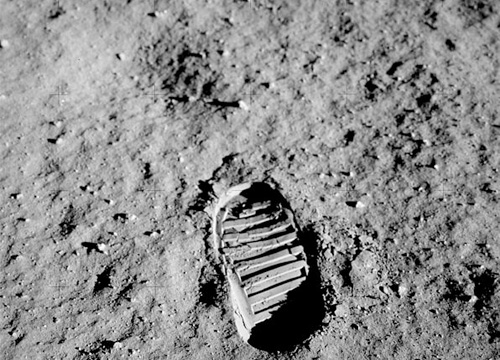
moonprintThe picture to the left was taken 45 years ago. It is the remnant of one of the first foot prints to be left on the surface of the moon.

On July 20, 1969, astronauts Neil A. Armstrong and Edwin E. “Buzz” Aldrin, Jr. touched down on the surface of the moon as part of the Apollo 11 mission. At 10:39:33 PM EDT, Armstrong opened the hatch of the lunar module and climbed down the ladder to the moon’s surface. He then made his historic statement: “That’s one small step for man, one giant leap for mankind.”

moonbootArmstrong and Aldrin were wearing boots made from a special silicon rubber developed by GE. To commemorate this event, GE decided to make 100 pairs of a moon boot sneaker called The Missions, and they will sell for $196.90 a pair.

Even though the Bible doesn’t say anything about walking on the moon, it does say quite a bit about walking for the Master:

• We are called to follow the example of Jesus and walk in love (Ephesians 5:2).
• We are to follow in the footsteps of the faith of Abraham (Romans 4:12).
• We are to walk by faith, not by sight (2 Corinthians 5:7).
• We are to walk as children of light (Ephesians 5:8).
• We are to walk worthy of the Lord, fully pleasing to Him, bearing fruit in every good work and growing in the knowledge of God (Colossians 1:10).
• Paul issued a warning to those who walked in a disorderly manner, not working at all, but were busybodies (I Thessalonians 3:11).

You don’t have to buy a pair of fancy boots to go on a mission for God, but you should take the time to acknowledge Him and allow Him to direct your paths: “Trust in the Lord with all your heart and lean not on your own understanding; In all your ways acknowledge Him, and He shall direct your paths (Proverbs 3:5-6).”

Ever Been Gobsmacked?

wowI want to do two things with this blog today. First, I want to share Lamentations 3:22-26 with you—it’s a favorite of mine: “The steadfast love of the Lord never ceases; his mercies never come to an end; they are new every morning; great is your faithfulness. “The Lord is my portion,” says my soul, “therefore I will hope in him.” The Lord is good to those who wait for him, to the soul who seeks him. It is good that one should wait quietly for the salvation of the Lord.”

Second, I want to express my long-overdue gratitude to the Navigators. While I was in the Air Force and was stationed in Colorado Springs, I came to know Christ. Shortly after that, I was befriended by a “nav,” and was invited out to the Navigators headquarters in Glen Eyrie in 1972.

I was gobsmacked to learn how much Scripture my friend had memorized. There were several shoe boxes full of hundreds of cards with Scripture printed on them, and he had committed them to memory.

By the way, there was a third thing I wanted to do today—I wanted to use “gobsmacked” in a sentence. Gobsmacked means “astounded.”

I was more than just astounded by the spiritual discipline of the people I met at the Navigators—I was also challenged to begin memorizing Scripture, and I’m thankful for this because it changed my life (Psalm 119:9-11).

One of the first verses I committed to memory was the passage from Lamentations, and there is some gobsmacking and astounding truth in these words from the prophet Jeremiah:

• God’s love is steadfast and it never ceases
• His mercies are endless, they never go stale, and they are renewed every morning
• God’s faithfulness is great
• Because God’s resources are enough to meet my needs I can hope in Him
• When you wait on God and seek Him, you will experience His goodness and His salvation

If you will claim the truth of this Scripture, you might just have a gobsmacking day today.

Feed-Sack Faith

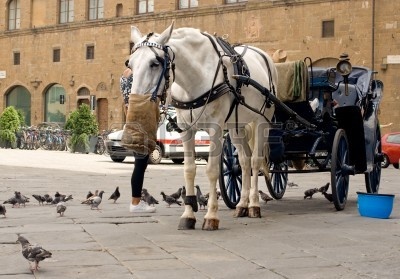
7802561-horse-and-carriage-in-florence-italy-resting-horse-having-feed-from-a-hessian-sackSince I come from a family of eight children, I know the importance of being on-time when it is meal time, and when possible, being at the head of the line. In fact, eating is one of the few things I do well, so I do as much of it as I can.

This may be why I like what Solomon said in Proverbs 15:15: “a merry heart has a continual feast.” I’ve never been too concerned about eating a large meal; I would rather put the feed-sack on and “graze” all day long.

You don’t have to be a cardiologist to know that the health of your heart is a key factor in the health of your entire body; and Solomon knew that the attitude of your heart determines your perspective on life.

There is a direct connection in Scripture that links a healthy heart to the outcomes of your life. The key here is not the circumstances of life, but the Christ who died to give you life.

Notice the principles in the following verses:

• Psalm 13:5-6: Because I have trusted in Your mercy my heart shall rejoice in Your salvation. I will sing to the Lord, because He has dealt bountifully with me.
• Psalm 27:14: Wait on the Lord; Be of good courage, And He shall strengthen your heart; Wait, I say, on the Lord!
• Proverbs 4:23: Guard your heart above all else, for it is the source of life.
• Proverbs 14:30: A tranquil heart is life to the body, but jealousy is rottenness to the bones.
• Proverbs 16:23: The heart of the wise teaches his mouth, and adds learning to his lips.
• Proverbs 23:26: My son, give me your heart, and let your eyes observe my ways

Are you living a life that is characterized by a robust faith, or is your spiritual health busted? In Proverbs 17:22, Solomon said: “A merry heart does good, like medicine.” If your life is all famine and no feast, you may need to get into God’s medicine cabinet and take a healthy dose of His Word.

Destestable or Acceptable?

echoIf someone surprised you with a tape recording of everything you have said this week, what would you discover? This question came to my mind after I read Psalm 19:14: “May the words of my mouth and the meditation of my heart be acceptable to You, Lord, my rock and my Redeemer.”

After listening to the recording, what would you discover about the words of your mouth and the meditation of your heart? Would God find your words to be detestable or acceptable?

There are several places in the Bible that remind us of the importance of minding our tongue:

• Psalm 144:8 Warns of a person “Whose mouth speaks lying words, and whose right hand is a right hand of falsehood.”
• Proverbs 6:2 reminds us that, “You are snared by the words of your mouth; You are taken by the words of your mouth.
• Proverbs 16:24 says that, “Pleasant words are like a honeycomb, sweetness to the soul and health to the bones.

If you could stand at the edge of a valley and hear the echo of every word you have spoken in your life, what would you hear? Would you hear the reverberating sound of pleasant and wholesome words, or would you hear the hollow sound of rude and crude language?

I encourage you to take the next day or two and focus on Psalm 19:14, and make it your prayer to God: “May the words of my mouth and the meditation of my heart be acceptable to You, Lord, my rock and my Redeemer.”