Encoded Barcodes

encodeWe live in a hurry-up and get-it-done world. To help us live in an orderly and speedy fashion, we rely on day planners and grocery scanners.

That little rectangle box of dark lines in varied widths is encoded with information that reveals the price of the product, and it helps to control inventory. The UPC code became operational in 1974 and a pack of Wrigley’s chewing gum was the first item to be scanned using this system.barcode

According to the agency which issues barcode numbers (GS1 or Global Standards One), about 5 billion barcodes are scanned every day. This lends itself to the concept that you are little more than a number among the masses.

Let me assure you, God never forgets your face, and He always remembers your name. David was sure of this when he wrote Psalm 139: O LORD, you examine me and know. You know when I sit down and when I get up; even from far away you understand my motives. You carefully observe me when I travel or when I lie down to rest; you are aware of everything I do.

Wow! God is “aware” of everything you do, and regardless of your actions, thoughts, and decisions, He still loves you.

As David contemplates this awesome relationship, he says: Where can I go to escape your spirit? Where can I flee to escape your presence? If I were to ascend to heaven, you would be there. If I were to sprawl out in Sheol, there you would be. If I were to fly away on the wings of the dawn and settle down on the other side of the sea, even there your hand would guide me, your right hand would grab hold of me.

When the UPC made its appearance in 1974, the letters stood for Universal Product Code. When you read Psalm 139, think of UPC as the Universal Purpose of Christ.

Does this Psalm give you the idea that you are encoded with the love of God? Doesn’t John 3:16 do the same thing? For this is the way God loved the world: He gave his one and only Son, so that everyone who believes in him will not perish but have eternal life. The Universal Purpose of Christ was to die for you, so you could live with Him.

gumIt might have started with the lip-smacking, bubble-blowing, taste bud-satisfying Wrigley’s gum, but when you think of UPC in the context of God’s love, the flavor last much longer than a stick of gum and it satisfies the soul.


The Sound of Spring

finchI always look forward to the coming of Spring; its arrival is heralded with the song of yellow finch as they eat from the thistle filled feeder hanging from a tree. They are often joined by their redheaded cousins, and cardinals eat from another feeder close by.

These brightly colored birds do something that we generally associate with human activity. I’m speaking of praise and worship. In Psalm 148:1-4, it is clear that God’s creation is to actively praise Him. When you skip down to verse 7, it suggests that the song of the bird is an act of praise to God.

The Psalm closes with these words: “Let them praise the name of the Lord, for his name alone is exalted; his splendor is above the earth and the heavens. And he has raised up for his people a horn, the praise of all his faithful servants, of Israel, the people close to his heart. Praise the Lord.”

I want to encourage you to give some consideration to what you say today. When you make a choice of words, make sure they are choice words.

Your choice of words will define you. Are you known more for your tongue lashings or for your words of grace and encouragement?

This was the centerpiece of James thoughts when he said: “For every kind of animal, bird, reptile, and sea creature is subdued and has been subdued by humankind. But no human being can subdue the tongue; it is a restless evil, full of deadly poison. With it we bless the Lord and Father, and with it we curse people made in God’s image. From the same mouth come blessing and cursing. These things should not be so, my brothers and sisters. A spring does not pour out fresh water and bitter water from the same opening, does it? Can a fig tree produce olives, my brothers and sisters, or a vine produce figs? Neither can a salt water spring produce fresh water (3:7-12)”

Birds sing because they have a song, and you should praise God because he has put a new song in your heart.

Psalm 40:2-4: “He also brought me up out of a horrible pit, out of the miry clay, and set my feet upon a rock, and established my steps. He has put a new song in my mouth—Praise to our God;
Many will see it and fear, and will trust in the LORD. Blessed is that man who makes the LORD his trust, and does not respect the proud, nor such as turn aside to lies.”

Rubber Ducky

121-pack27-021514-tmCanard is a French word that means duck, but to understand the true meaning of “canard,” you need to consider its older context. The French phrase, “vendre des canard a moitie, means “to sell ducks by half.”

As the story goes there was one merchant in a town who sold ducks. Everything went well until a second merchant entered the market, and he started a bidding war. The price went from 8 Francs to 7 and down to 6. The original duck merchant became frustrated, so he advertised: “Ducks for Two Francs.” However, in small print at the bottom of the advertisement, it read: “for half a duck.”

The word “canard” became associated with something that was literally true, but also misleading. Canard is now used in reference to trickery, deceit, or a hoax.

Paul warns us of canards: “We should no longer be children, tossed to and fro and carried about with every wind of doctrine, by the trickery of men, in the cunning craftiness of deceitful plotting (Ephesians 4:14).

Flash back to the Garden of Eden and the serpent’s persuasive little chat with Eve that had resounding repercussions. In this conversation, Satan employed deceptive language to create doubt in the mind of Eve: “Has God indeed said, ‘You shall not eat of every tree of the garden’?”

“Indeed,” as used here, is a word of innuendo; Satan was saying: “You’ve got to be kidding! Only a crazy person would limit your freedom and say you can’t have something that is so good for you.” This was a tactic to kindle Eve’s smoldering desire.

And, desire never reads the fine print. James spoke of the subtle power of desire: “Each one is tempted when he is lured and enticed by his own desires. Then when desire conceives, it gives birth to sin, and when sin is full grown, it gives birth to death (1:14, 15).”
Did you notice the two words preceding “desires?” They are not “your neighbor” or “your friend.” They are: “his own.” What may tempt me may be of no concern to you, but both of us are responsible to control the desires that urge us on.

Ray Stedman has an interesting comment on this:
The first step the Devil takes with us is always to arouse desire to do wrong, to create a hunger, a lure or enticement toward evil. The second is to permit intent to form and an act to occur. This is what James describes as “desire when it has conceived bringing forth sin.” Notice that the symbol he employs is that of conception and birth. There is a gestation period in temptation, for once desire is aroused there occurs a process within which sooner or later issues in sin, an act that is wrong. The third stage is that the Devil immediately acts upon the opportunity afforded by the evil act to move in and to produce results which Scripture describes as death — “Sin when it is full-grown brings forth death.”

If you want to give a little more thought to this subject, think about how Satan tempted Eve in connection to the two” lusts” and one “pride” in I John 2:15-16.

Connecting the Dots

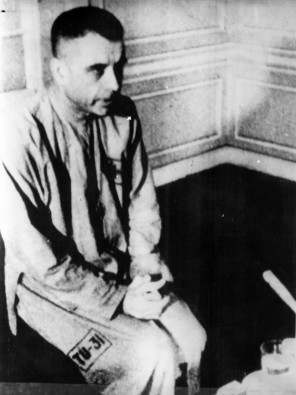
dentonIf you are too young to remember the Vietnam War, you may not be familiar with a brave and courageous man. His name is Jeremiah Denton, and I was saddened when I read of his death last week.

The service of U.S. Navy Comdr. Jeremiah A. Denton, Jr., was nothing short of remarkable. As the pilot of an A-6 Intruder, he led bombing runs over North Vietnam. On July 18, 1965, he was shot down and taken prisoner.

While at the Hanoi Hilton, his captors intended to use him in a propaganda statement that would denounce the American war effort and praise the Viet Cong for their humane treatment.

Denton’s words were not as important as his actions. He said: “Whatever the position of my government, I believe in it, yes, sir,” he said. “I am a member of that government, and it is my job to support it, and I will as long as I live.” While he was speaking these words, he was also sending a Morse code message by blinking his eyelids:
T: – O: – – – R: • – • T: — U: • • – R: • – • E: • By connecting the dots, Denton’s message made sense.

When I think of the tenacious spirit of Denton, I’m reminded of Paul’s call to commitment: “ . . . run with endurance the race set out for us, keeping our eyes fixed on Jesus, the pioneer and perfecter of our faith. For the joy set out for him he endured the cross, disregarding its shame, and has taken his seat at the right hand of the throne of God. Think of him who endured such opposition against himself by sinners, so that you may not grow weary in your souls and give up (Hebrews 12:1-3).”

One reason Denton persevered was because he connected the dots. He “fixed” his eyes on Jesus. “A man,” Denton said, “does a lot of praying in an enemy prison. Prayer, even more than sheer thought, is the firmest anchor.”

When the winds of adversity roar through your life at a dizzying speed, what is the anchor of your soul?

Note: I encourage you to watch the short video of Denton’s interview by clicking here.

You’re A Piece of Art!

51-pack3-021514-tm“Blind as a bat” is an old cliché that most of us have heard, but that is not the vision problem that restricts most Christians—tunnel vision is the more common affliction. Like blinders on a horse, our view of what we can become is narrowed by a focus on what we have been.

We need to forget what I like to call LBC or Life Before Christ, and focus on the potential of what we can become in Jesus.

Any woodworker, silversmith, or potter will know what I mean when I say “potential.” These craftsmen can see an ordinary piece of wood, rock, or clay and see its potential to become something new. They have the same gift as Michael Angelo who said: “I saw the angel in the marble and carved until I set him free.”

Paul tried to explain this concept to the Ephesians when he said: “For we are his workmanship, created in Christ Jesus for good works, which God prepared beforehand, that we should walk in them (Ephesians 2:10).” Wow! His “workmanship!” His piece of art!

Instead of limiting yourself with an LBC mindset, begin to believe that God sees the potential within you and He has gifted you in a special way. At the instant you became one of His children, you were blessed with eyes of faith to claim His promises, strength for the journey, and the mind of Christ.

A favorite verse of mine is 2 Corinthians 5:17: “Therefore, if anyone is in Christ, he is a new creation; old things have passed away; behold, all things have become new.”

Paul did not allow an LBC focus to mold his life: “This one thing I do: forgetting what lies behind and straining forward to what lies ahead, I press on toward the goal for the prize of the upward call of God in Christ Jesus (Philippians 3:14).”

If you’re like me, you may not be much of an artist, but I still know that I’m a piece of art, and like Paul, “I am sure of this, that He who began a good work in you will bring it to completion at the day of Jesus Christ (Philippians 1:6).”

Producing Produce

pecan-tree-river-ovalAre you producing produce? According to John 15:16-17, this is exactly what Jesus has chosen us to do: “You did not choose me, but I chose you and appointed you that you should go and bear fruit and that your fruit should abide, so that whatever you ask the Father in my name, he may give it to you. These things I command you, so that you will love one another.”

When we engage in the practice of producing produce, we will be living a relationship of love. This Christ-like kinship is an expression of the first and greatest commandment. Jesus spoke of this in Matthew 22: “Love the Lord your God with all your heart and with all your soul and with all your mind. This is the first and greatest commandment. And the second is like it: Love your neighbor as yourself.”

To be effective produce producers, we need to have the right look:

• We need to LOOK UP to God in expressions of love and worship.
• We need to LOOK IN to see if we are living the disciplined life of a “chosen” child of God.
• We need to LOOK OUT to share the fruit of the Spirit with the people we encounter each day of our lives.

One more LOOK is needed, and it is a fresh peek at a principle in John 15: “ Abide in me, and I in you. As the branch cannot bear fruit by itself, unless it abides in the vine, neither can you, unless you abide in me. I am the vine; you are the branches. Whoever abides in me and I in him, he it is that bears much fruit, for apart from me you can do nothing.”

What produce are you producing?

MIA: Two Vowels and the Letter “M”

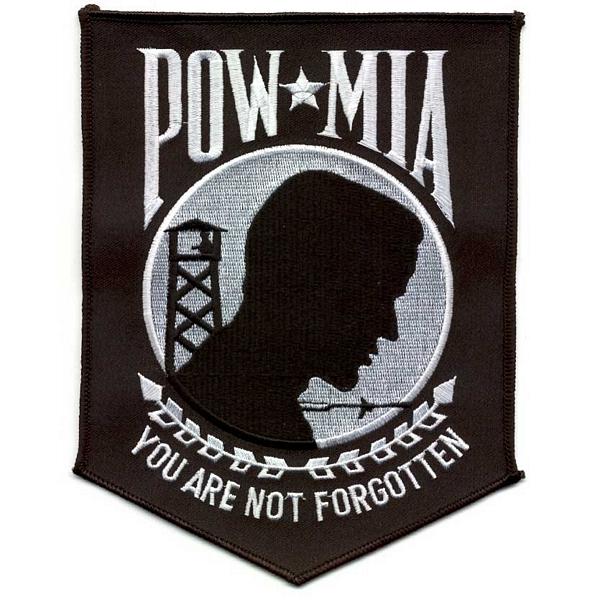
miaPOW-MIA: The white stitching of these 6 letters is sewn on the bill of my black hat. The purpose and design of hats like these is to call us to duty, and that duty is to not forget and to always remember the sacrifice of those who served.

When I came home from work last night, I laid my hat aside and sat down in my chair. A little later I glanced at my hat, and my attention was focused on two vowels and the letter “M.”

The letters spell MIA (Missing In Action), and when I spin them around and rearrange them, they form a declaration and a question:

• I am!
• Am I?

As I think about this declaration and the question, I contemplate a conversation in Isaiah chapter six: “Whom will I send? Who will go for us?” Isaiah responded: “Here I am. Send me!”

I get the idea that up to this point in his life, Isaiah was MIA. The item of importance is not so much what Isaiah was or was not, but whether I am or am not.

Can I make a declaration or must I ask a question?

• I am serving the Lord!
• Am I serving the Lord?

This declaration and question was at the heart of what Jesus said to His disciples in Matthew 9:35-37: “The harvest is plentiful, but the laborers are few; therefore pray earnestly to the Lord of the harvest to send out laborers into his harvest.”

Is your place in the harvest a declaration or a question?
• I am praying earnestly for more people to join hands and work in the harvest.
• I am actively at work in the harvest.
• Am I earnestly and actively using my gifts and abilities for God’s glory?

MIA: I am! or Am I? Two vowels and the letter “M”—How do they define your life?

The Morning Essential: Caffeine

timcupI’m going to confirm what you may have suspected for some time: I’m a head-case. Not only am I a head-case, I’m a government certified, card-carrying, head-case!

Without boring you with too many details, I sustained a head injury while I served in the Air Force, and I’ve been plagued with daily headaches since 1972. Many different formulas have been prescribed to try to help me manage the pain, but nothing seems to work.

One of the pills I’ve tried consists of a blend of acetaminophen, butalbital, and caffeine. The acetaminophen is used to relieve inflammation and pain; the butalbital acts as a sedative relaxant; and the caffeine enhances the effects of the acetaminophen and butalbital.

Without the caffeine, the acetaminophen and butalbital would have some effect; however, for maximum effectiveness, the pill needs the presence of the caffeine.

I see a correlation between the effectiveness of the caffeine and the empowering and enlightening of the Holy Spirit that Paul wrote about in Ephesians: “I pray that the God of our Lord Jesus Christ, the glorious Father, would give you a spirit of wisdom and revelation in the knowledge of Him. I pray that the perception of your mind may be enlightened so you may know what is the hope of His calling, what are the glorious riches of His inheritance among the saints, and what is the immeasurable greatness of His power to us who believe, according to the working of His vast strength.”

I guess you can say my morning routine includes caffeine and more caffeine. I begin by popping a K-Cup in my Keurig, going to my chair, and sipping my coffee as I ask for God’s Spirit to enlighten me as I read His word.

I know that I need to start every day with a fresh cup of His wisdom, and I invite you to join me—sip it in and live it out.

A Step Behind

1downwardHave you ever had one of those days where you felt like you just couldn’t get caught up? Well, if you felt like you were a step behind yesterday, you may be an hour late this morning.

If you didn’t move your clock forward an hour yesterday, you may have some problems this morning. Instead of running a little late to work or school, you’re still falling backwards and need to leap ahead one hour—ASAP!

Time is an often discussed subject in the pages of Scripture, and Paul wrote of it in Romans 13: “Knowing the time, that now it is high time to awake out of sleep; for now our salvation is nearer than when we first believed. The night is far spent, the day is at hand. Therefore let us cast off the works of darkness, and let us put on the armor of light.”

The Apostle continued this theme when he wrote to the churches at Philippi and Colossae. In both letters he called on Christians to “redeem the time.” The word “redeem” is the Greek “exagorazó,” and it means to buy up. Paul was challenging people to buy up every opportunity to do what’s right, because of the downward spiral towards immorality.

Regardless of what you did with your seconds of yesterday, it is what you do with your minutes of today that is important. Yesterday is gone, but each hour of today is a gift from God, and they are ripe with the potential to change the future.

This truth is the focus of a discussion in The Fellowship of the Ring: “I wish it need not have happened in my time,” said Frodo. “So do I,” said Gandalf, “and so do all who live to see such times. But that is not for them to decide. All we have to decide is what to do with the time that is given us (J.R.R. Tolkien).”

The question is not: “Are you having the time of your time?” The question that truly matters is this: “What are you going to do with the time of your life?”

Hand-Me-Down-Syndrome

syndromeHand-Me-Down-Syndrome: I just checked Google, and I find no mention of it in a medical dictionary. Since this dreadful syndrome has afflicted most every person born into this world, its lack of mention is interesting

The first born child, often times, will not be fashioned by the hemlines of this condition, but she is directly involved in the distribution of this disorder. Prior to her birth, her mother, grandmother, aunts, and well-meaning family friends bought her cutesy, little pink girly dresses; and, within a few months she outgrows it all.

The Hand-Me-Down-Syndrome begins when the second child is born, and she gets the leftover hand-me-downs that had been previously worn by big sister. While this process is played out in many families, and it is a good money-saving practice, I received very little of what my older brother had worn. He was kind of a skinny, scrawny kid, and I was more robust—I much prefer robust to chunky!

This syndrome can manifest itself in either a negative or a positive fashion. As parents, we can pass-down unhealthy patterns of living (substance abuse, domestic violence, etc.), or we can be a guiding hand that provides positive re-enforcement.

Our children will mimic what we have modeled. Again, this can be either positive or negative. Paul gave a great example of this in his letter to Timothy: “I remember you in my prayers night and day, greatly desiring to see you, being mindful of your tears, that I may be filled with joy, when I call to remembrance the genuine faith that is in you, which dwelt first in your grandmother Lois and your mother Eunice, and I am persuaded is in you also (2 Tim 1:3-5).”

Timothy was blessed by the powerful faith aspect of this syndrome. It began with his grandmother, was handed down to his mother, and Timothy dazzled the church as a fashion model of the faith.

How have you modeled your faith for your family? What are you handing-down and passing-on to them?