Of the 365 days on the calendar, three are more time oriented than the other 362. Two of them are associated with a specific hour in which the hours of clocks either spring forward or fall back 60 minutes. The third day is a festive occasion where people bid farewell to the year that was and celebrate the potential and promise of the year that will be.
Every year is like each day—there is a sunrise and a sunset to each one and the interluding period between the two is filled with joys and sorrows, rights and wrongs, and victories and failures.
As I write this, we are minutes away from the final sunset of 2020, and I’m reminded of Paul’s admonition to the church at Ephesus: “Don’t let the sun set on your anger.”
Several years ago, I read Forgive for Good: A Proven Prescription for Health and Happiness (Harper Collins 2002). After reading this book, I concluded: Smoldering anger and spiteful resentment will rob us of joyful contentment.
Fred Luskin, the author of the book, believes that carrying a grudge raises your blood pressure, depletes immune function, makes you more depressed and causes enormous physical stress to the whole body. Forgiveness interrupts this downward spiral by purging the toxic mixture of anger, bitterness, hatred, and resentment.
Since the health benefits of forgiving far outweigh the disadvantages of nursing a grudge, I encourage you enter 2021 with a spirit of forgiveness.
Like Bil Keane (Family Circus) has said: Yesterday is history, tomorrow is a mystery, today is a gift of God, which is why we call it the present.”
I encourage you to use the present to give the gift of forgiveness. The one who gives will be as blessed as the one who receives.

 In an article in Christianity Today (October 2019), Gerald Sittser wrote about the early church and the Christians who embraced a new story. “The story of Jesus opened their eyes to see history not as a narrative of the empire’s achievements—and atrocities—but as a narrative of God’s redemptive work in the world, which often occurs in quiet and mysterious ways. For them, Bethlehem and Golgotha occupied center stage, not the Roman court.”
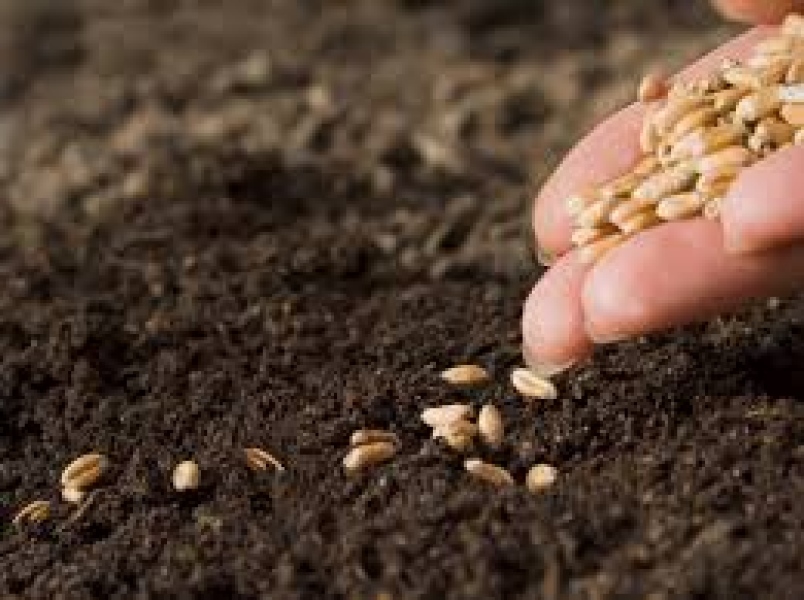 I’ve never heard the Apostle Paul described as a Master Gardener, but he was an authority on sowing and reaping, and He spoke about it in the 6th chapter of Galatians.
 What is it that you first think of when you hear the word Velcro? Is it the stick-to-itiveness quality of this 1941 George de Mestral invention?
 I don’t have any hills in my yard, but I do hear the sound of music. My feathered friends have begun their annual return, and they’re filling the air with their joyful melodies. As they arrive, they’re met by the faithful chickadees and nuthatches who have fed on sunflower seeds and weathered the winter.
 insightbyseymour