Fixers

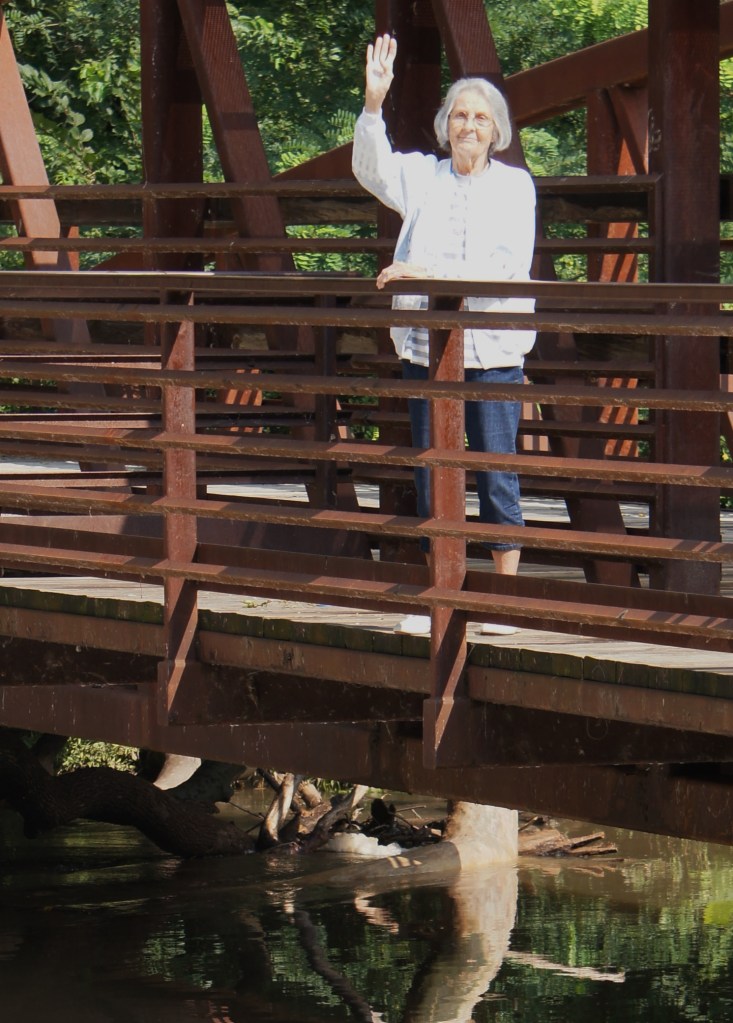
As I was channel surfing the other day, I paused for a moment and thought about a man who had fixed a problem for me. His name wasn’t Marcus Lemonis; it was A.P. Lindsey, and he was The Fixer decades before Marcus was born.

When Mr. Lindsey returned to El Dorado, Kansas after his stint in the Navy during WWII, he worked for McClure’s Motor Company.  A few years later, he opened his own shop—Lindsey’s Body Shop.  A.P. was known as a master craftsman and painter, and the man you wanted to put the pieces of your car back together after a wreck.

When the wing-window on my vehicle broke, I dropped it off at Lindsey’s to get it  fixed. When I returned a couple of hours later, he said: “Stan, that part was too expensive so I fixed it by making a part out of some of the scrap metal in the shop.” When I examined Lindsey’s work, it was much better than the original. 

People like A.P. are a rare breed today—he wasn’t just a part replacer, he was a fixer.

Fixers are people who don’t fume and fuss over the difficulties they face, they simply begin and then do whatever is necessary to finish. Some people make trouble, others make excuses, but fixers make good—they keep their promises.

Even though Lindsey drew his last breath and went on to his reward on December 3, 2010, I still remember that his quiet enthusiasm was contagious, and how it infected the lives of his family and friends.

May God bless us with more men and women who are determined to be fixers—people who are craftsmen with highly honed skills, and fixers like Lindsey who are the iron that sharpens the character of others (Proverbs 22:17) and who seek out opportunities to help those in need (Galatians 6:10).

Moths, Mice, and T-Rex

From my childhood days to the present, I’ve been captivated by the vibrant colors of a sunrise as well as the darkening of the horizon as day yields to sunset.

This past Friday I settled into my blind to enjoy the sights and sounds of Mother Nature, and she rewarded me with the shuffling feet of a covey of quail on fallen leaves, the cawing of crows in a nearby corn field, and to an unsuspecting bobcat who trotted past me, oblivious to my presence.

My contemplative moment was interrupted when my chair suddenly ripped, and I fell to the ground. When I landed on my rump with a bone-rattling thump, I was certain that seismic monitors had sent an earthquake alert to the USGS.

Though I’m on the hefty side, the problem was not my weight, and it was not moths who had the munchies—it was a mouse. A mouse! My solitude had been gnawed away through the turpitude of a ravenous rodent that had devoured the underside of my chair like it was a Thanksgiving feast.

As I was lying on the ground, I thought of the wise words of Jesus: “Do not store up for yourselves treasures on earth where moth and rust destroy and where thieves break in and steal. But store up for yourselves treasures in heaven, where neither moth nor rust destroy and where thieves do not break in nor steal, for where your treasure is, there will your heart be also (Matthew 6:19-21).”

Even though my treasure was fairly new, comfortable, strong and sturdy, it was no match for the teeth of a tiny mouse with the appetite of a Tyrannosaurus Rex.

What about your treasures? Are they fragile, frail, and feeble, or are they decent, distinctive, and dynamic? “Where your treasure is, there will your heart be also.

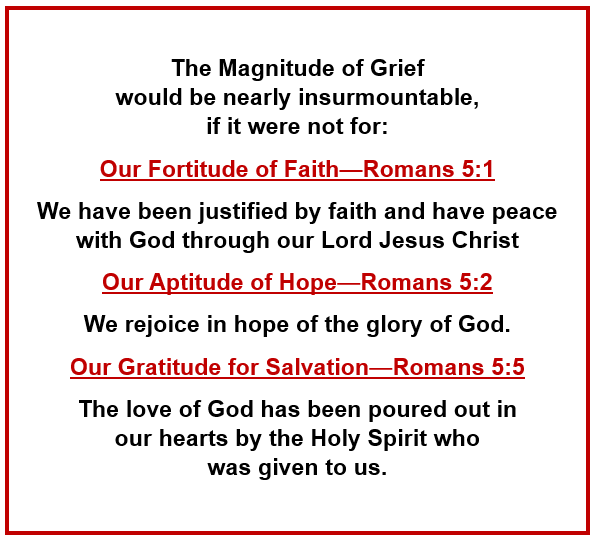
For Those Who Grieve

A Tribute to Mom

Eleven years ago today, I walked into my mother’s room and said: “Mom, today is your birthday.  Do you know how old you are?”  She thought for a moment and said: “No Stan, I don’t think I do.” “You’re 101,” I said.  My statement revived her spunky and independent spirit, and she informed me that, “I might not know how old I am, but I know I’m not 101!

Mom died about a month later form the ravages of Alzheimer’s. Since today is her birthday, I’m re-posting this blog as a tribute to her. . .

Times were tough in 1930. The stock market crash in 1929 had knocked the economic wind out of the United States and left it gasping for survival. Some 1,350 banks would fail and close their doors. The newspaper headlines reported on financial failures as well as world leaders like Mussolini, Stalin, and Herbert Hoover.

At this time in our nation’s history bread was 9 cents a loaf, gas was 10 cents a gallon, and a movie ticket was 35 cents.

On Friday, June 20th, about halfway through 1930, Buzz Aldrin was born. At the time of his birth, the idea of space flight was just science fiction; however, Aldrin would join Neil Armstrong on the Apollo 11 mission in 1969; and, they would be the first two people to walk on the moon.

Buzz Aldrin wasn’t the only person born on June 20, 1930. A baby girl, who would never experience his fame and notoriety, was also born. Her family had little money but a lot of love. Her fragile world was shattered a few years later when her mother died. She quit school in the 8th grade because her dad needed her to help work the fields—the fields of a farm he would later be forced to sell.

As a young lady, she married, but heartache found her again. At the age of 35, she became a widow when her husband was killed on the job, and she was left with three young sons. A short time later she married again. Five children came with her new husband. His 5 and her 3 made for a memorable life that could be as harried as it was happy.

When her second husband died, the truth was exposed: She was weaker than any of her family knew. Her cognitive skills were becoming cobwebs; Her sense of direction failed her; and, she was often lost.

Mom’s independent spirit served her well for most of her life. She kept going and remained positive when she had every right to be negative and quit. It’s that same spirit that kept saying: “I’m not staying here. I’m going home.” With the next sentence, however, it’s was evident that Alzheimer’s had a befuddling grip on her once vibrant mind and spirit.

Buzz Aldrin may have walked on the moon, but he stands in the shadow of my mother, Evelyn Lou Lacy–the girl who was also born June 20, 1930. She’s been a loving and loyal daughter, a faithful wife to two fortunate men, and a sometimes-fearsome force who molded the life of her children.

Frozen

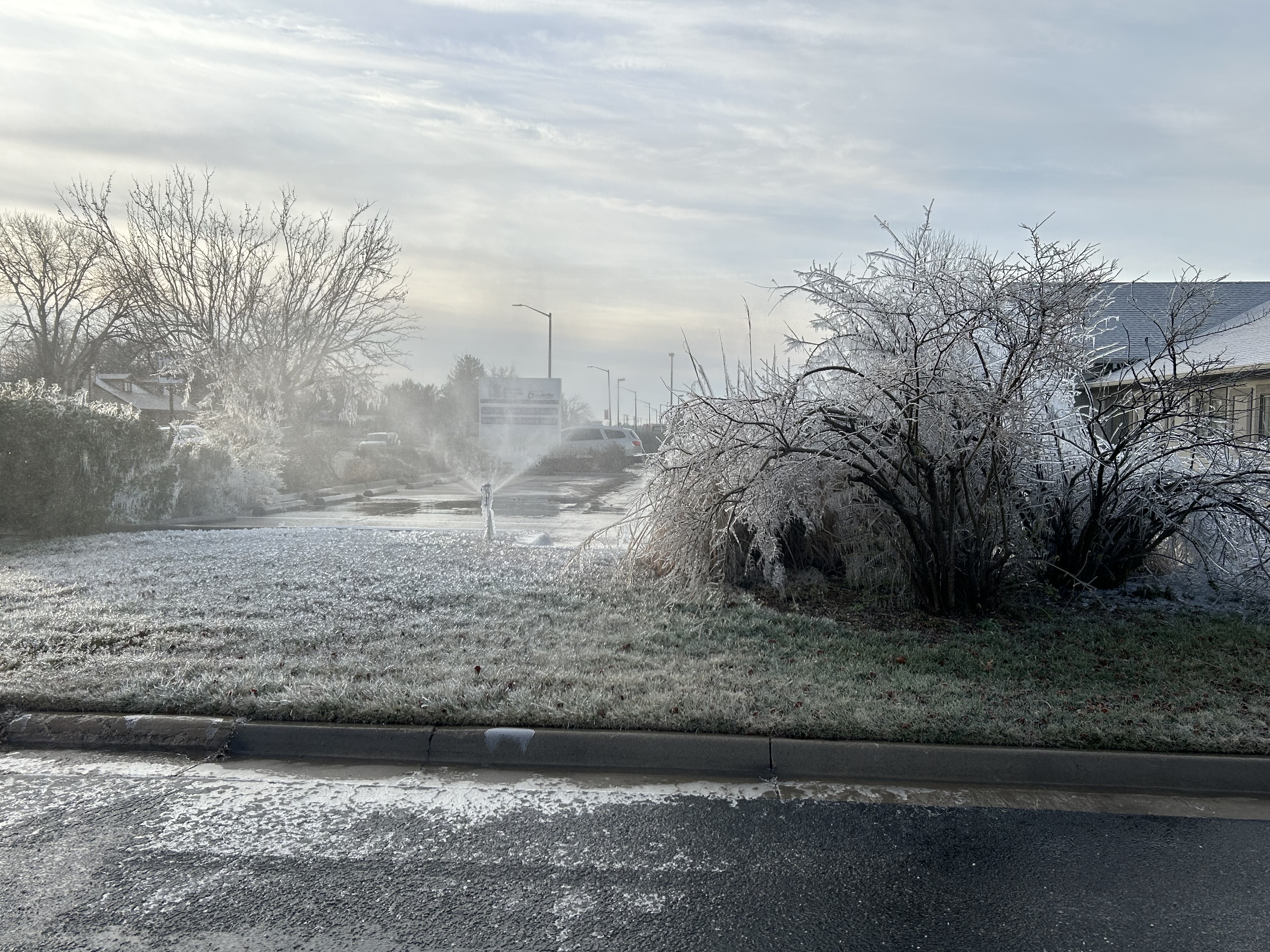
Some people describe Winter as “majestic,” others think of it as “miserable.” Recently I encountered a frozen winter wonderland, that was misery to the owner. The bushes had icicles hanging from the limbs and the parking lot was better suited for a bruising game of hockey than it was for a place to park your car.

The ice covered sprinkler system had become a frigid fountain spraying ice pellets across the landscape. The frozen scenery was due to a lack of proactive priorities as much as it was the freezing temperatures.

Frozen is rarely the chosen word to express the positive; instead, it is used more often to express the negative: frozen shoulder, frozen by fear, or frozen bank account.

Let me suggest a pragmatic use of the word FROZE:

F: Be Faithful. What does God’s Word to Abraham mean to you? “I am God Almighty, walk before me faithfully and be blameless (Genesis 17:1).”
R: Be a person of Resolve. What decision are you making to glorify God? “Daniel resolved not to defile himself . . . (Daniel 1:8).”

O: Be Optimistic. How does the statement of Jesus encourage you? “I have told you these things, so in me you may have peace. In this world you will have trouble. But take heart! I have overcome the world (John 16:33).”

Z: Be Zealous. Are you habitually living your life in a manner that’s pleasing to God? “Whatever you do, in word or deed, do everything in the name of the Lord Jesus. . . (Colossians 3:27).”

E: Be committed to Exercise. Are you practicing self-discipline and competing for the prize? “Run in such a way that you may obtain it (1 Corinthians 9:24-27).”

To the good people of Kansas and others who are facing a forecast of sub-zero temperatures. I encourage you to pour a cup of hot coffee, grab a warm blanket, and reflect on this post as you look forward to warmer temperatures.

The Resolutions of Jonathan Edwards: The First 7 out of 70 in Modern English

Resolved:  I will DO whatever I think will be most to God’s glory; and my own good, profit and pleasure, for as long as I live. I will do all these things without any consideration of the time they take.  Resolved: to do whatever I understand to be my duty and will provide the most good and benefit to mankind in general. Resolved to do this, whatever difficulties I encounter, and no matter how many I experience or how severe they may be.

Resolved: I will continually endeavor to find new ways to practice and promote the things from Resolution 1.

Resolved: If ever – really, whenever – I fail & fall and/or grow weary & dull; whenever I begin to neglect the keeping of any part of these Resolutions; I will repent of everything I can remember that I have violated or neglected, …as soon as I come to my senses again.

Resolved: Never to do anything, whether physically or spiritually, except what glorifies God.  In fact, I resolve not only to this commitment, but I resolve not to even grieve and gripe about these things, …if I can avoid it.

Resolved: Never lose one moment of time; but seize the time to use it in the most profitable way I possibly can.

Resolved: To live with all my might, …while I do live.

Resolved: Never to do anything which I would be afraid to do if it were the last hour of my life.

TGIM

Even though there has been the tragedy of terrorism in Turkey, a tragic accident at an air show, the trauma of another hurricane in Florida, and we have faced another tentative election cycle, it is Monday and God is still on His throne.

Instead of focusing on the worries and woes of life, I choose to reflect on God’s love that’s expressed as His “benefits” in Psalm 103. On this Monday morning, I praise God because:

1. He forgives our sin (Psalm 103:3).

2. He satisfies us with good things (Psalm 103:5)

3. He executes righteousness and justice (Psalm 103:6).

4. He is slow to anger and abounds in mercy (Psalm 103:8).

5. He doesn’t deal with us as our sins deserve (Psalm 103:10).

6. He has removed our sin as far as the east is from the west (Psalm 103:12).

Thank God It’s Monday!

Pressing On

LeeAdianez Rodriguez is a 12-year-old girl from New York, and her actions in a recent race are the epitome of “pressing on and going the extra mile.”  LeeAdianez was registered for a 5K race, but ended up running a half marathon.  About halfway through the course, she realized she was running with the wrong group. Instead of quitting, she decided to run the 10 extra miles and finish the race.

When I read this story, I wondered why this was the first time LeeAdianez had competed at this level:

  • Had her parents denied her permission?
  • Was it because her coach told her she was unprepared?
  • Did she doubt her ability?

A person can limit himself by doubting his ability and sometimes we limit God because of a lack of faith.  A little mind-shift in your cognitive approach to life is a step in the right direction, and it will help if you will:

 Recognize that doubting is normal:

  • There were times in the life of Abraham when this man of incredible faith doubted.  In each of these instances, he was focused more on his personal strength and ability than he was on the powerful promises of God.
  • When in doubt, zoom out.  Make God your point of focus:  “Be strong and courageous, do not be afraid or tremble in dread before them, for it is the Lord your God who goes with you. He will not fail you or abandon you (Deuteronomy 31:6).”

Recognize the value of good friends and good principles:

  • Instead of doubting your faith, try doubting your doubts.
  • Assess your recent resources for news and information. Have you surrounded yourself with doubters and skeptics or people of faith?  “In the same way that iron sharpens iron, a person sharpens the character of his friend (Proverbs 27:17).”
  • Are you propping yourself up with false reasoning or trusting God?  “Trust in the LORD with all your heart and lean not on your own understanding; in all your ways submit to him, and he will make your paths straight. Do not be wise in your own eyes; fear the LORD and shun evil ( Proverbs 3:5-7).”

Recognize that absolute certainty is an unreasonable expectation:

  • You will never have full and complete knowledge about everything. The quest to know more is the fuel that energizes honest research.
  • Just because you cannot know everything there is to know about God, doesn’t mean that you should limit yourself in seeking to know more about Him.

Recognize that not understanding is different than not believing.

  • While you may limit yourself because you don’t believe in your potential, don’t limit God by trying to constrain Him with a finite mind of rigid boundaries.
  • When the Israelites left Egypt, they thought the trip to the Promised Land was going to be an easy sprint; but, their doubt turned it into a 40 year marathon.

Doubt is to perseverance what krypton is to Superman.  Like LeeAdianez Rodriguez, you can press on when you recognize the correct message and listen to right voice—the voice of faith.

Forgiveness is Good Medicine

Of the 365 days on the calendar, three are more time oriented than the other 362. Two of them are associated with a specific hour in which the hours of clocks either spring forward or fall back 60 minutes. The third day is a festive occasion where people bid farewell to the year that was and celebrate the potential and promise of the year that will be.

Every year is like each day—there is a sunrise and a sunset to each one and the interluding period between the two is filled with joys and sorrows, rights and wrongs, and victories and failures.

As I write this, we are minutes away from the final sunset of 2020, and I’m reminded of Paul’s admonition to the church at Ephesus: “Don’t let the sun set on your anger.”

Several years ago, I read Forgive for Good: A Proven Prescription for Health and Happiness (Harper Collins 2002). After reading this book, I concluded: Smoldering anger and spiteful resentment will rob us of joyful contentment.

Fred Luskin, the author of the book, believes that carrying a grudge raises your blood pressure, depletes immune function, makes you more depressed and causes enormous physical stress to the whole body.  Forgiveness interrupts this downward spiral by purging the toxic mixture of anger, bitterness, hatred, and resentment.

Since the health benefits of forgiving far outweigh the disadvantages of nursing a grudge, I encourage you enter 2021 with a spirit of forgiveness.

Like  Bil Keane (Family Circus) has said:  Yesterday is history, tomorrow is a mystery, today is a gift of God, which is why we call it the present.”

I encourage you to use the present to give the gift of forgiveness.  The one who gives will be as blessed as the one who receives.

Thanksgiving: Is it Natural or Gracious?

Each year when we draw near to the end of November, we anticipate Thanksgiving Day, and we often hear someone quote I Thessalonians 5:17: “In everything give thanks: for this is the will of God in Christ Jesus concerning you.”

It’s easy to give thanks when you just landed that dream job, or you’ve been surprised by some unexpected blessing.  But, how do you give thanks when the dream becomes a nightmare, you suddenly realize how fragile you are, and you’re no longer so healthy or wealthy?

Do you still have a spirit of gratitude, and can you still give thanks? You can if you understand Paul’s admonition to the church of the Thessalonians. You can if you comprehend the difference between the word “in” and the word “for.”

Paul said we are to give thanks “in everything,” not “for everything.” The difference between the two is a distinction made by Jonathan Edwards and defined as natural gratitude and gracious gratitude.

Let me give you an example: Yesterday, the aroma of freshly baked pumpkin and cherry pie filled the air with a scintillating fragrance. Today, I will sit on the porch, sip my coffee, and as the tart and tasty cherries tickle my taste buds, I will give thanks—this is natural gratitude.

Gracious gratitude is when it is you and not the pie that is in the oven—the oven of trials and heartache; and, you still give thanks.  It is the expression of gratitude because you know God is with you in the midst of your worries and woe-some experiences.

This sort of gratitude is not distorted by your pains and problems because it is riveted on the character of God and exhibited by a robust trust in His promises. Moses described God as being One who is compassionate, gracious, slow to anger, and abounding in lovingkindness and truth (Exodus 34:6).”

And Paul, who was no stranger to hardships, encourages us to trust God and remain resilient when we face adversity:

  • Romans 5:3-5: We rejoice in our sufferings, knowing that suffering produces endurance, and endurance produces character, and character produces hope, and hope does not put us to shame, because God’s love has been poured into our hearts through the Holy Spirit who has been given to us.
  • Romans 8:28, 37-39: We know that all things work together for good to those who love God, to those who are the called according to His purpose. . . in all these things we are more than conquerors through him who loved us.  For I am sure that neither death nor life, nor angels nor rulers, nor things present nor things to come, nor powers, nor height nor depth, nor anything else in all creation, will be able to separate us from the love of God in Christ Jesus our Lord.

Even though we are facing uncertain times, we can express gracious gratitude, and “Give thanks to the Lord, for he is good; for his steadfast love endures forever! –Psalm 118:1